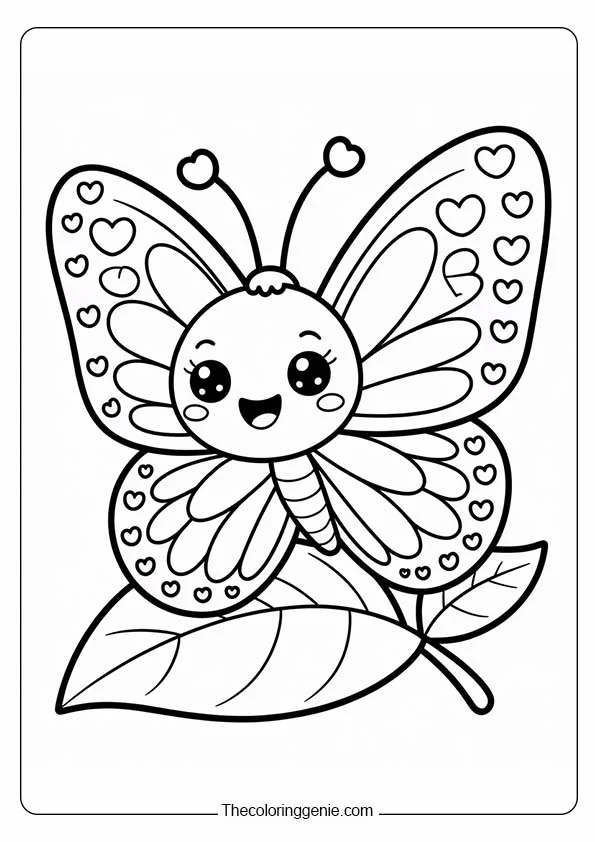
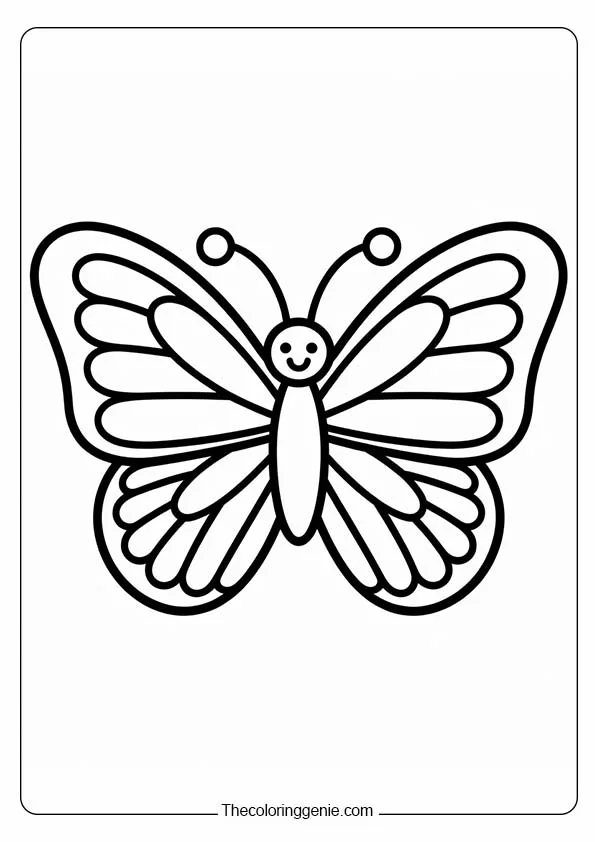
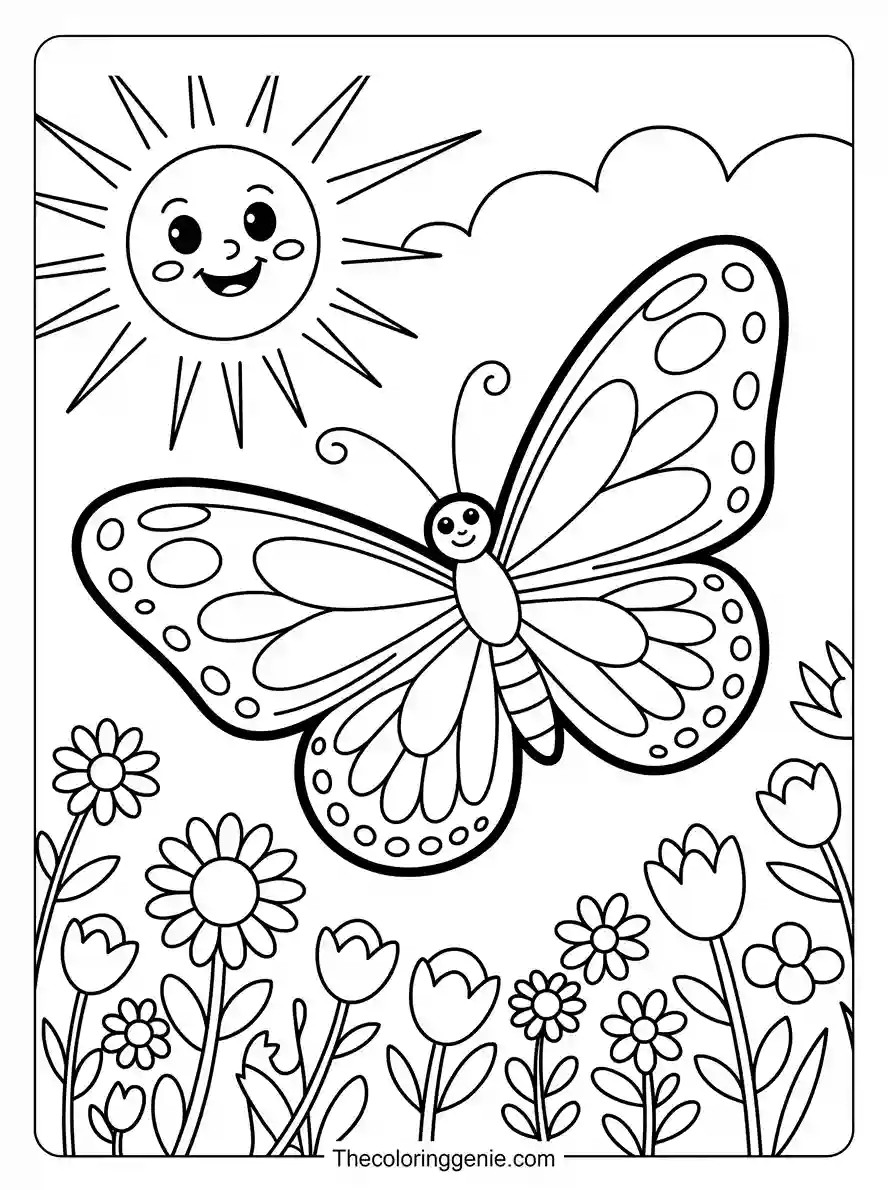
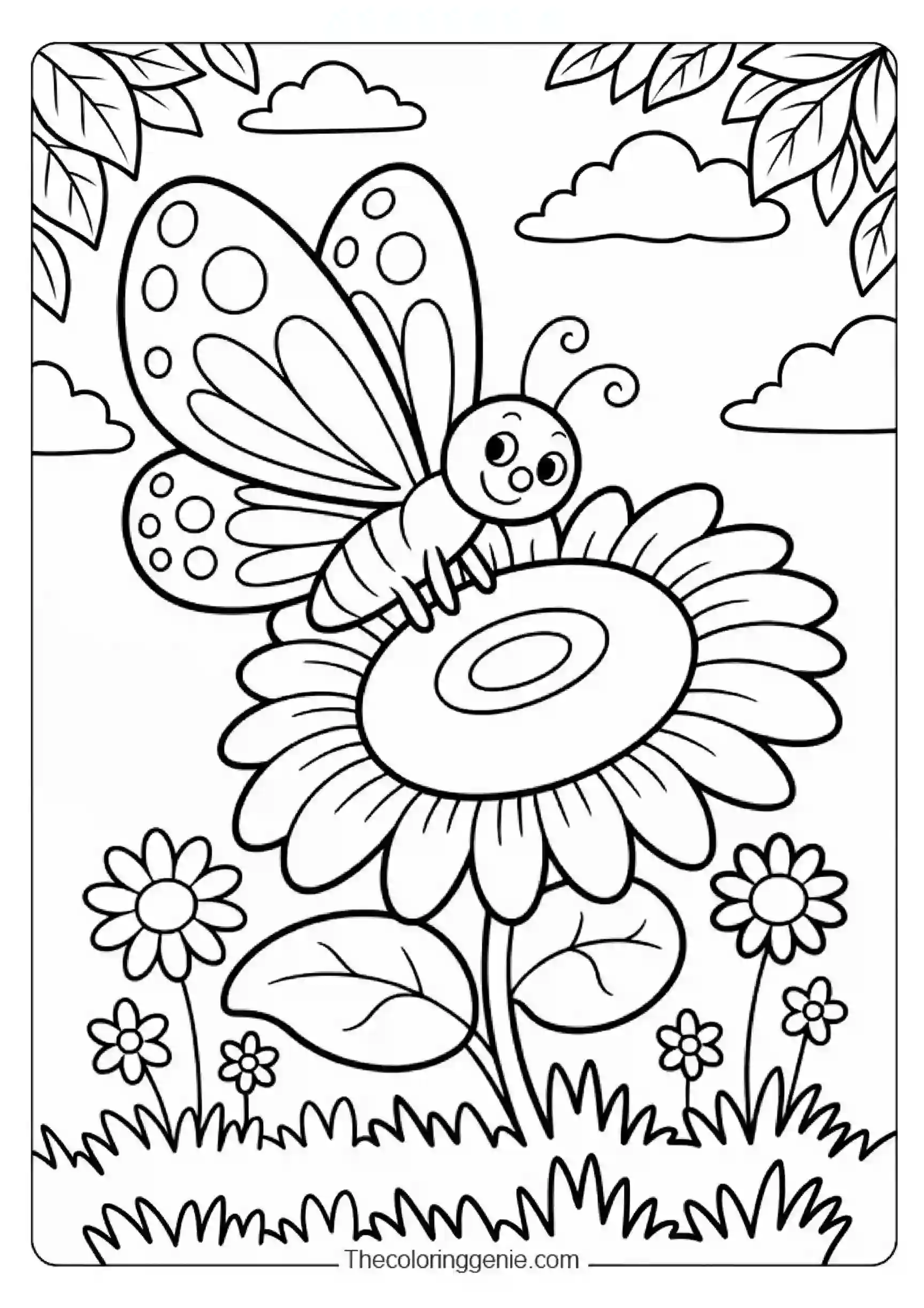
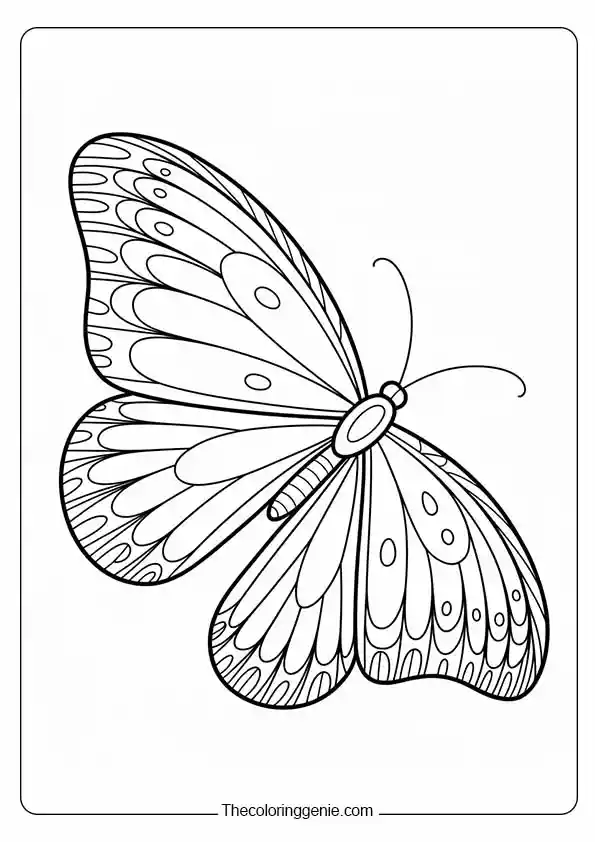
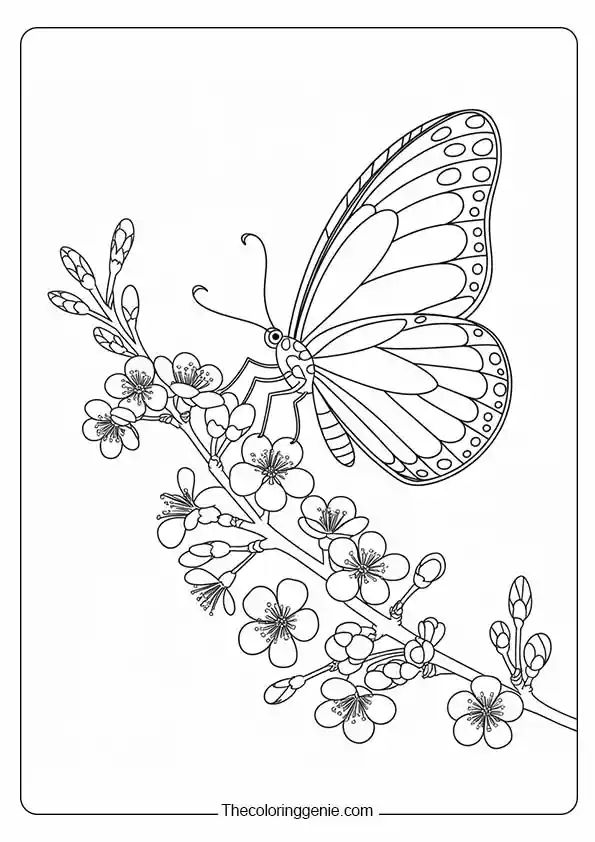
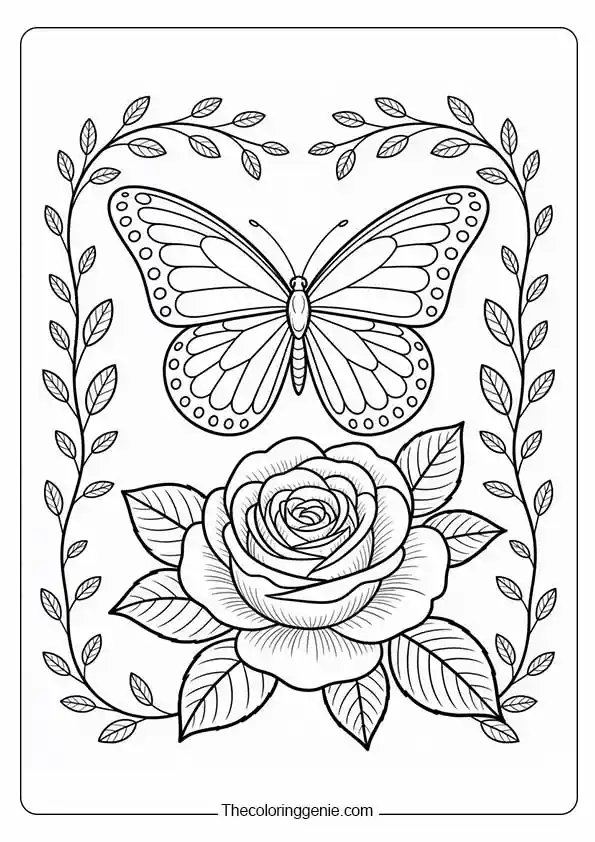
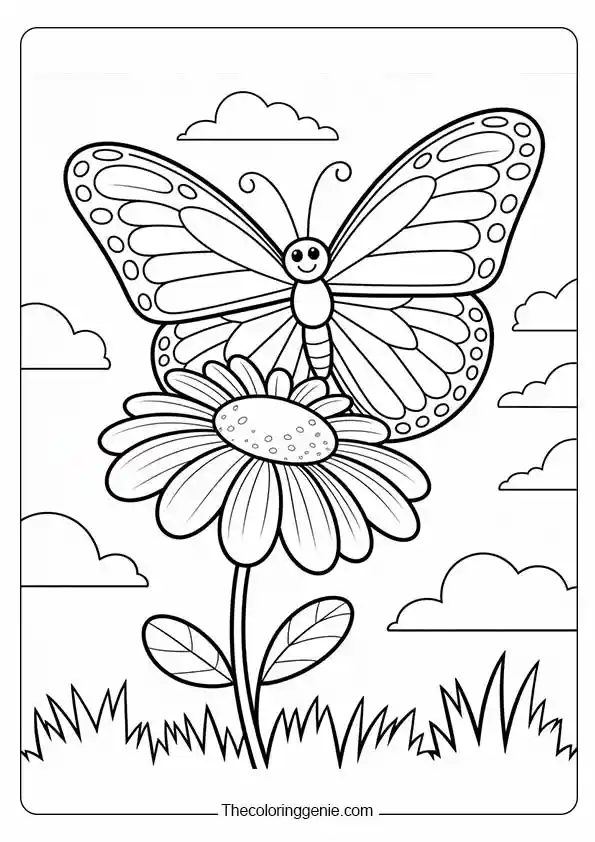
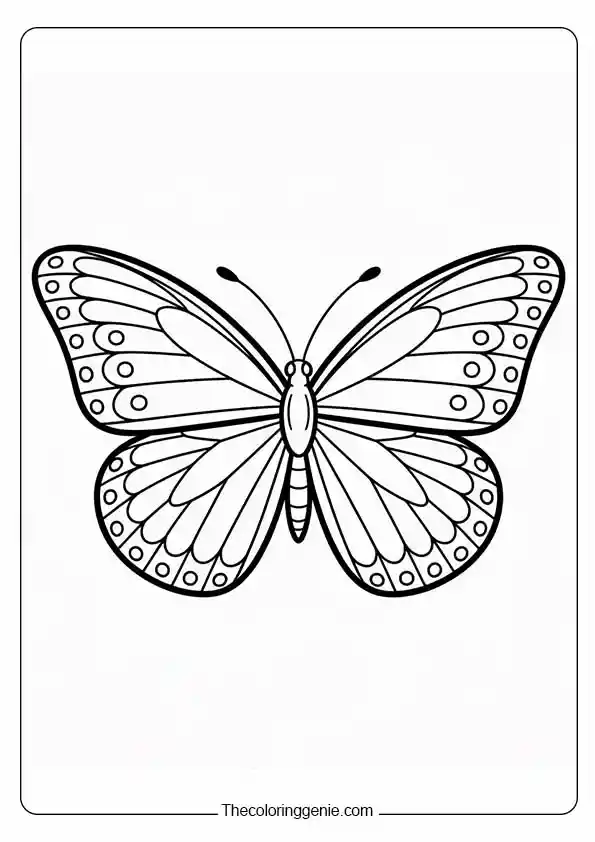
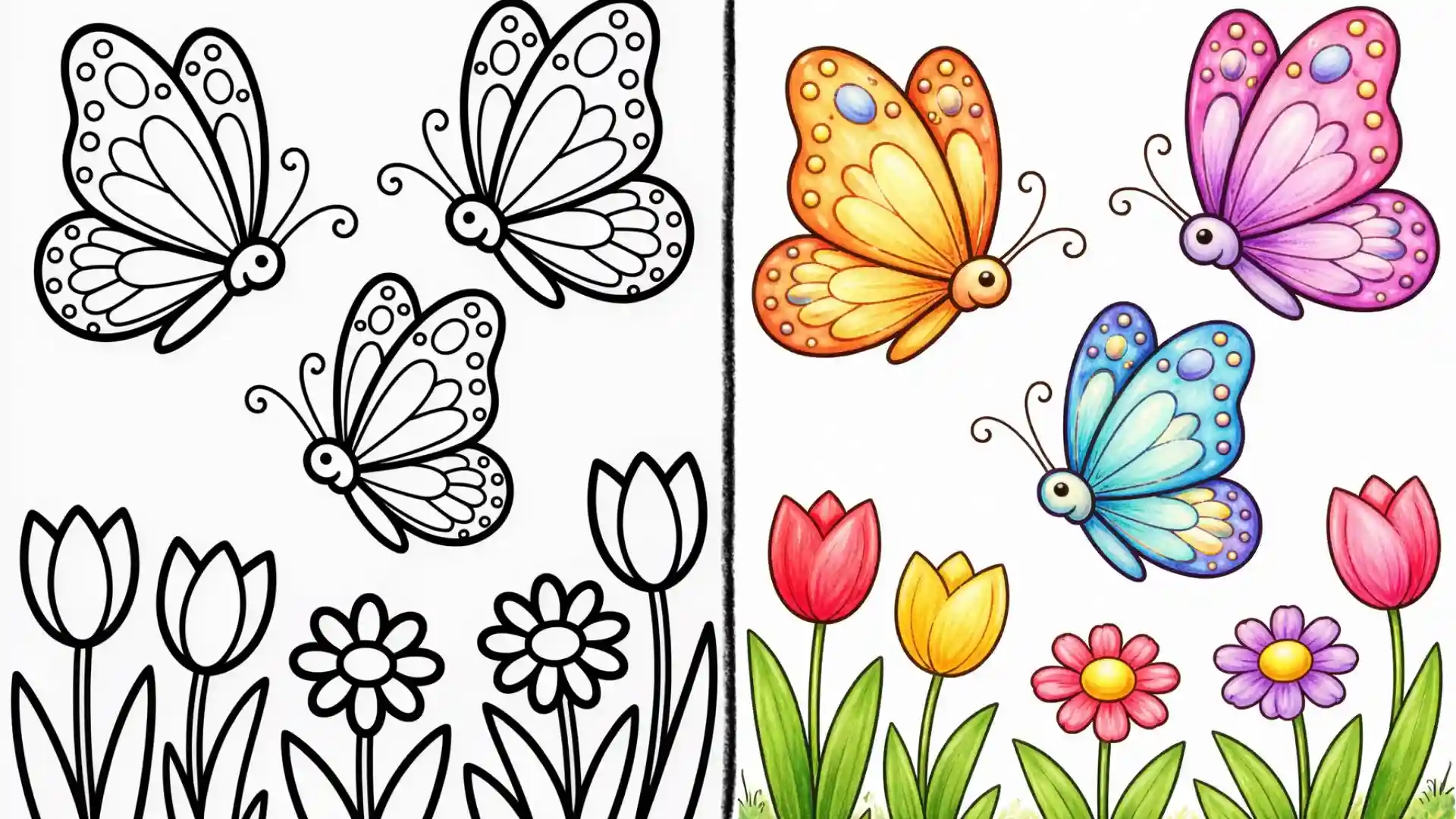
There are 52 butterfly coloring pages here, enough that the real job is finding the right one, so they’re sorted from big, bold shapes a toddler can finish to true-to-life wings, a butterfly mandala, and a life-cycle page for the classroom. There are cute smiling butterflies, butterflies resting on flowers, and realistic wings for older hands. Every design is a high-resolution PDF for US Letter or A4, free, with no account needed.
A butterfly is the one subject here with a rule built in: both wings are a mirror image of each other, so the trick is getting the two sides to match. Everything else, the colours are yours. Prefer the screen? Every design can be coloured online too.
Free Printable Butterfly Coloring Pages For Kids
The collection is grouped by style: simple, cute, with flowers, realistic, and the life cycle, and every design carries a difficulty label, so you can see at a glance which suits a preschooler and which is a longer sit-down for an older child or an adult. Click any design to open its PDF, or use the download button beneath it.
Choose “Fit to Page” and print on US Letter or A4. Plain paper handles crayons and pencils; for markers, use heavier paper with a spare sheet underneath so colour doesn’t bleed through. Full help is on our printing guide.
Getting the Wings to Match
A butterfly is the one subject on this site where the colouring has a real rule built in; the two wings are a mirror image. Everything else is open, but getting that match right is what makes a butterfly look finished.
Both Wings Match So Colour Them Together
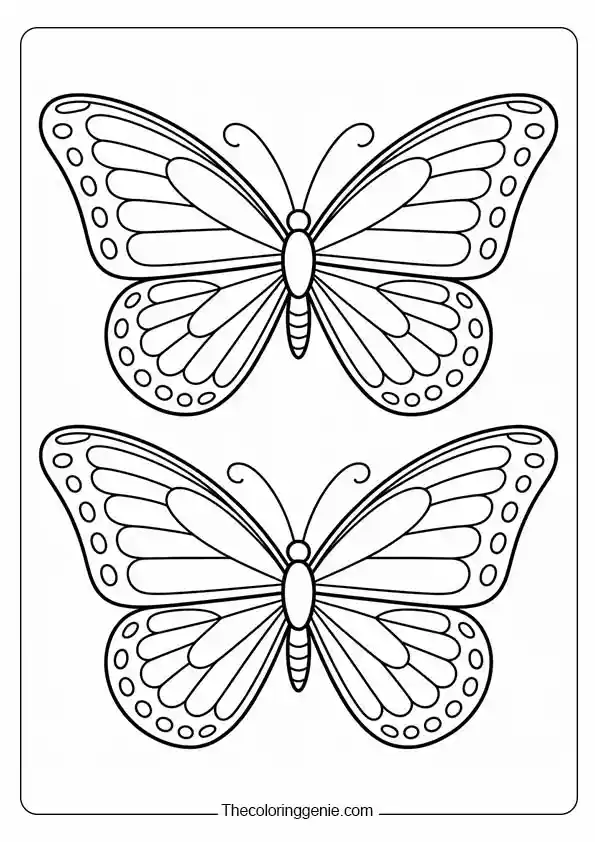
A real butterfly is symmetrical: whatever pattern and colour sits on the left wing is repeated exactly on the right. The easiest way to honour that is not to finish one wing and then copy it; by then, the first side has set a bar the second never quite reaches. Instead, take one colour and fill the matching shape on both wings before you pick up the next. Work outward from the body, pair by pair, and the two sides stay in step the whole way.
Real Butterfly Colours, or Your Own
Because these are real insects, you can colour them true to life or invent your own. For the realistic look, the monarch is the one everyone knows: orange wings with black veins and a black border dotted with white spots. A blue morpho is brilliant blue above; a swallowtail is yellow and black. If you’d rather make one up, a butterfly is the perfect place to do it — pick two or three colours that sit well together and repeat them across both wings. On the flower pages, give the butterfly a colour that stands clear of the blooms so it doesn’t vanish into them.
Where Butterflies Go Wrong
Two things trip people up. The first is mismatched wings: one side ends up darker or busier than the other because they were coloured one after the other instead of together. The second is a muddy middle: press hard and blend many colours where the wing sections meet and a crisp pattern turns grey. Keep each section its own colour, work up to the line between them and ease off there, and the wings stay sharp.
Which Tools to Use
Crayons and chunky pencils: the simple and preschool pages, younger hands
Washable markers: large single-butterfly wings (use heavier paper)
Colored pencils: the realistic wings and the mandala, where small sections need layering
A fine-tip or white gel pen: the wing-edge dots and the tiny spots on the detailed pages
In the Classroom: Butterflies and the Life Cycle
Butterflies are one of the first life cycles children learn, which makes these easy to build a lesson around.
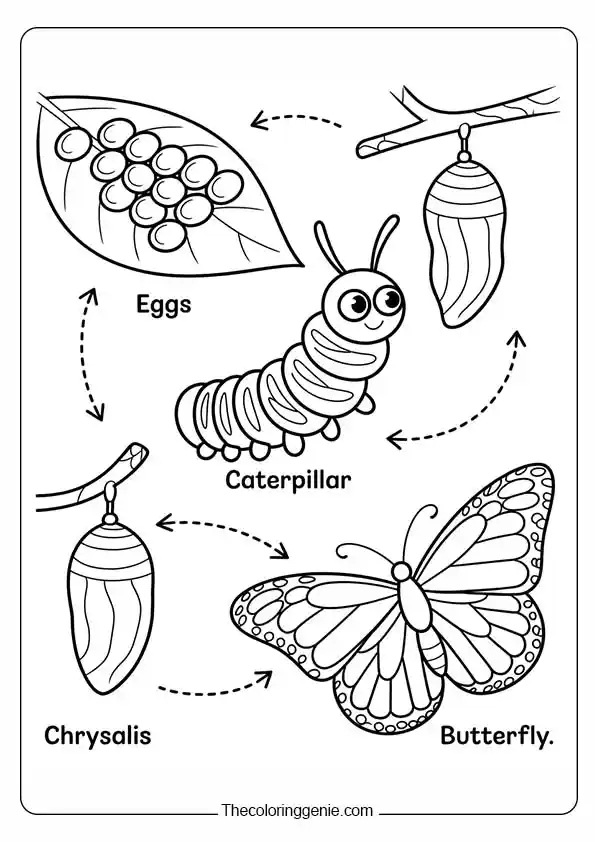
Colour the life cycle. The life-cycle pages show egg, caterpillar, chrysalis, and butterfly. Have students colour each stage and put them in order, or label them, as a metamorphosis activity that doubles as colouring time.
A symmetry lesson. Give each child a single butterfly and challenge them to make the two wings match exactly. It’s a hands-on way to teach symmetry in art or maths without it feeling like a worksheet.
Early finishers and quiet work. Keep the simple butterflies for early finishers and the realistic pages and mandala for older students who want longer, absorbing work. They need no prep.
At Home with the Butterfly Pages
A spring or garden theme. The flower pages suit a garden-party table or a rainy spring afternoon: younger children on the cute butterflies, older ones on the detailed wings.
A travel pack. Slip a few pages and a clipboard into a bag for car rides and waiting rooms. Colored pencils travel better than markers, which leak and lose their caps.
A matching game. Colour one wing, then let a younger child finish the other to match. It’s symmetry practice that doesn’t feel like a lesson.
FAQs
Which butterfly pages are best for a young child?
The simple and preschool designs, a single butterfly with big, bold shapes and few details,s are grouped under the Easy label.
Do any of these teach the life cycle?
Yes. The life-cycle pages show egg, caterpillar, chrysalis, and butterfly in order, which suits a science lesson on metamorphosis.
Are there realistic butterflies, or just cartoons?
Both. The realistic pages have true-to-life, symmetrical wing patterns for older kids and adults; the cute pages have smiling cartoon butterflies for younger children.
How do I keep both wings looking the same?
Colour one colour across both wings before moving to the next, rather than finishing one wing and trying to copy it. The guide above explains why.
Can I colour these online instead of printing?
Yes. Every design can be coloured online in your browser, free, with no account.
No comments to show.
Sarah Mitchell
Illustrator & Creative Artist at The Coloring Genie
Sarah Mitchell creates printable coloring artwork for The Coloring Genie,
including animal, nature, seasonal and imaginative designs. She focuses
on creating clear outlines and printable designs that are enjoyable to
color. Explore Sarah’s published work or see how she develops a coloring
page from an early sketch to the finished artwork.