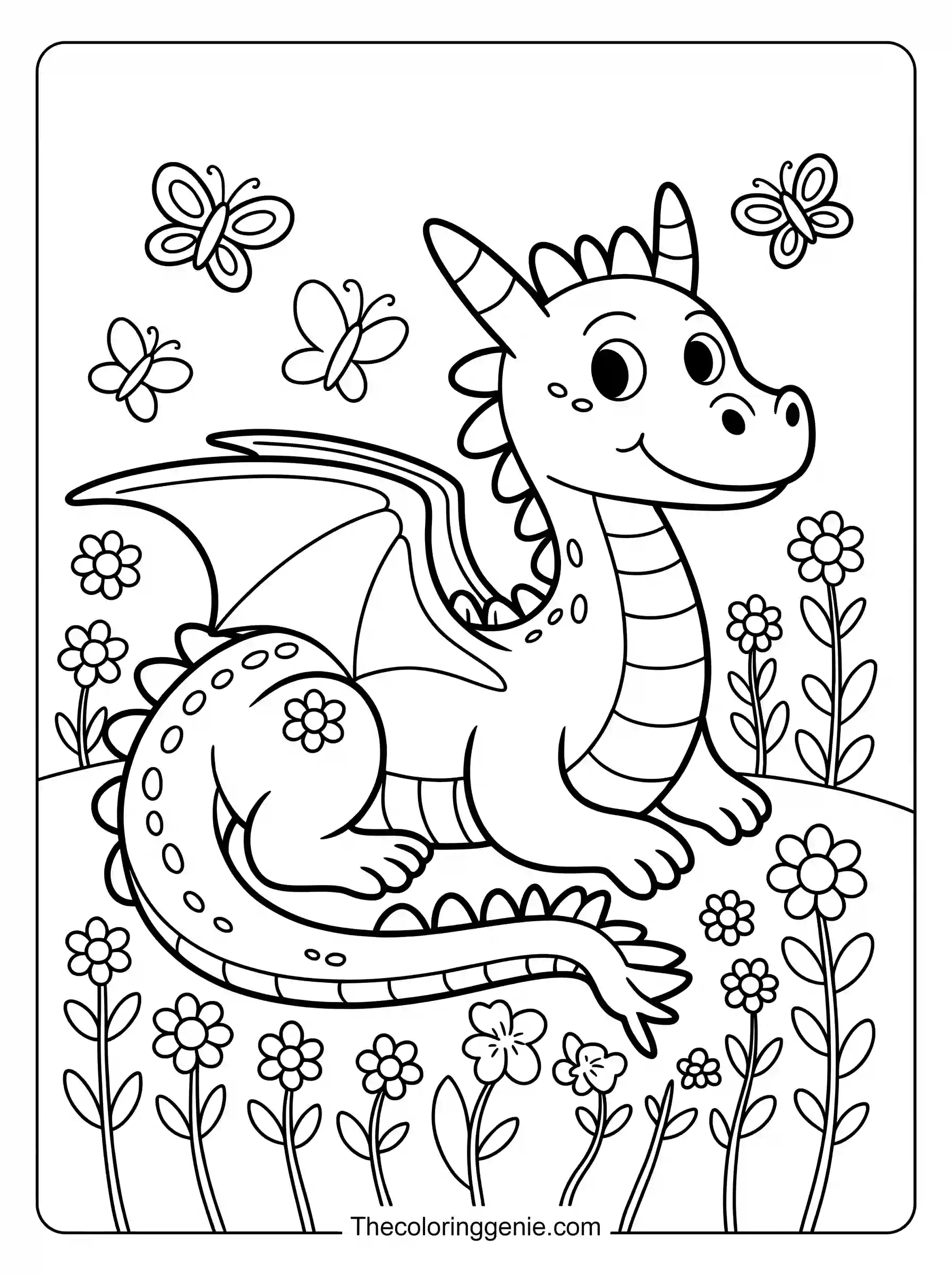
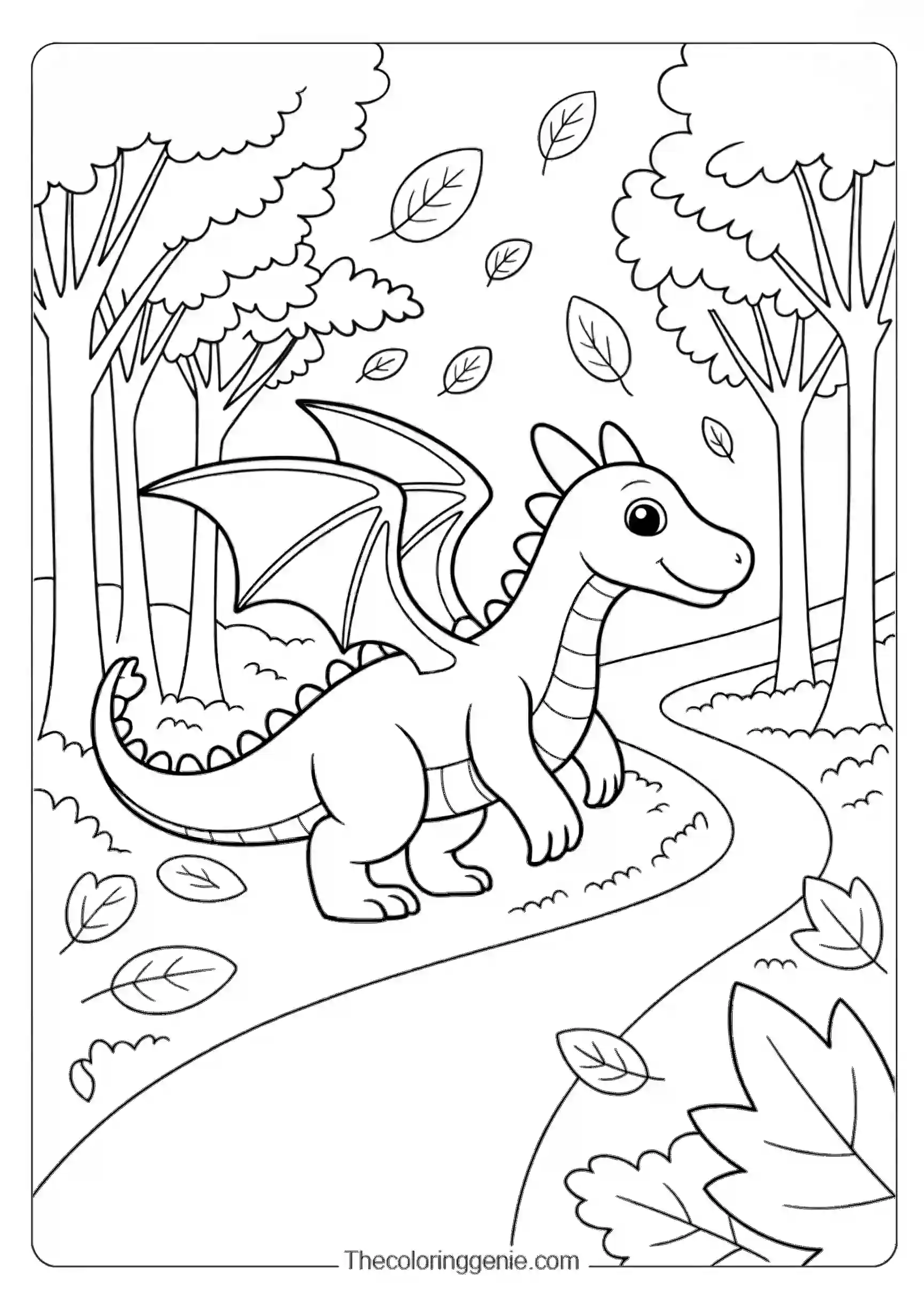
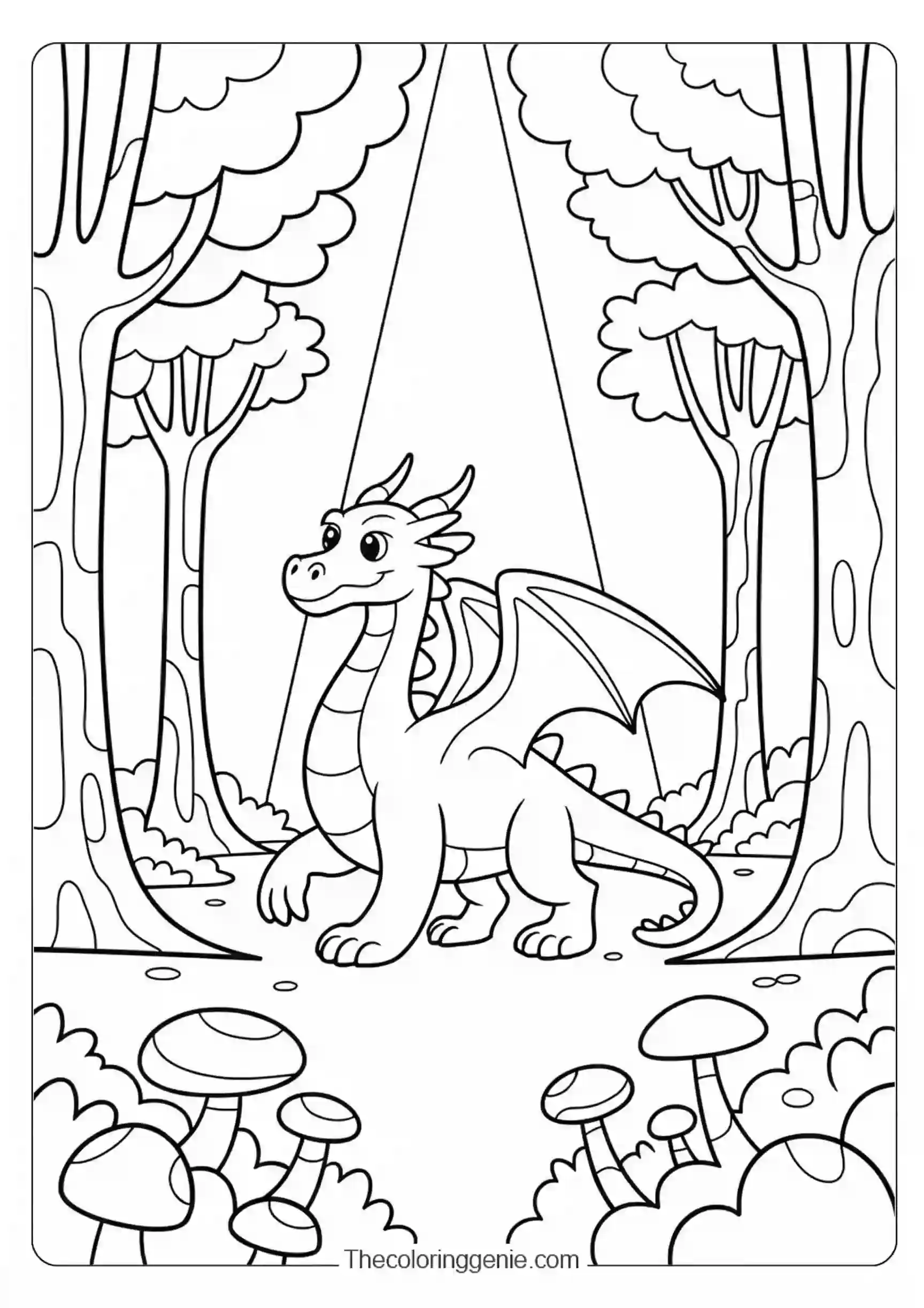
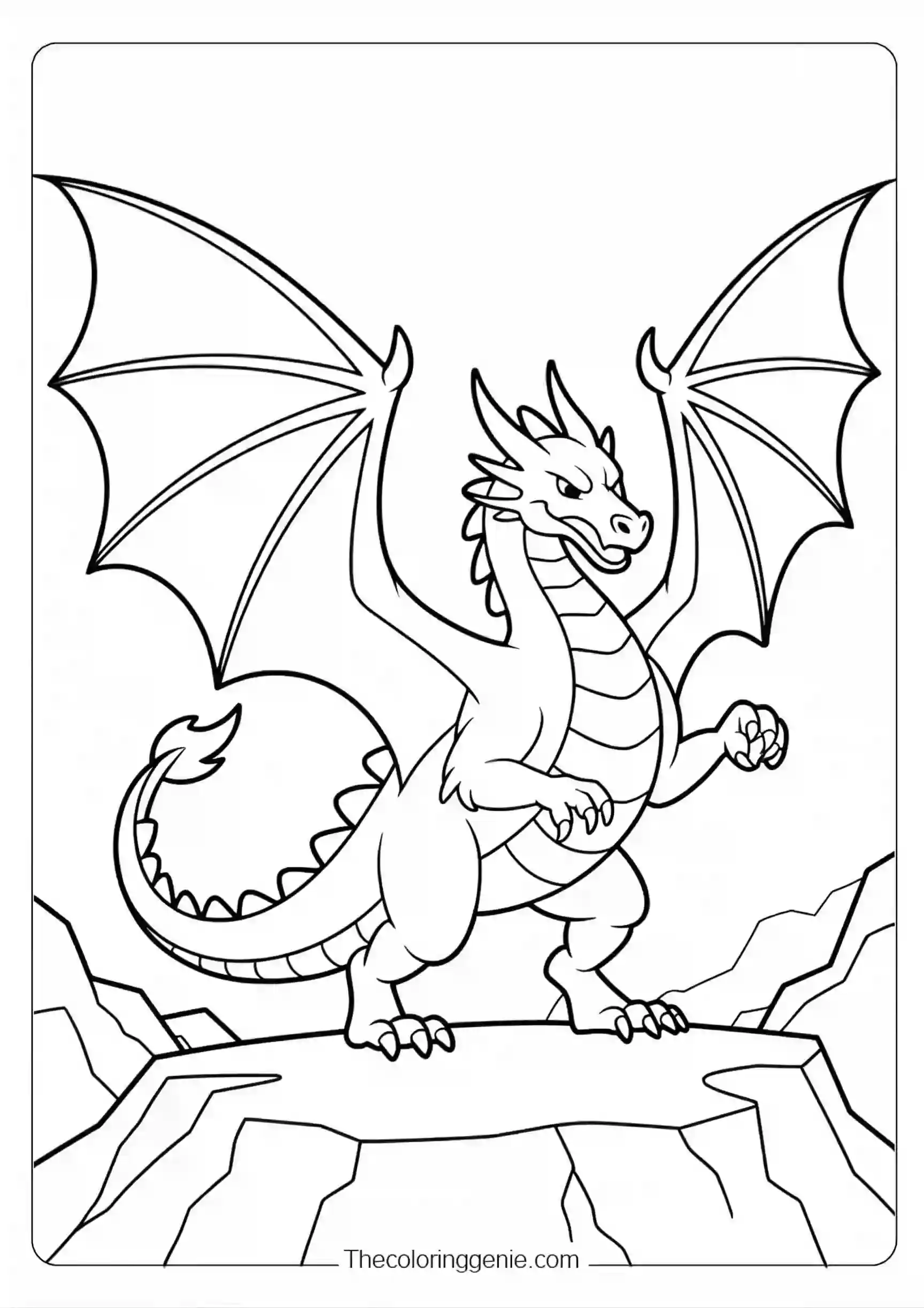
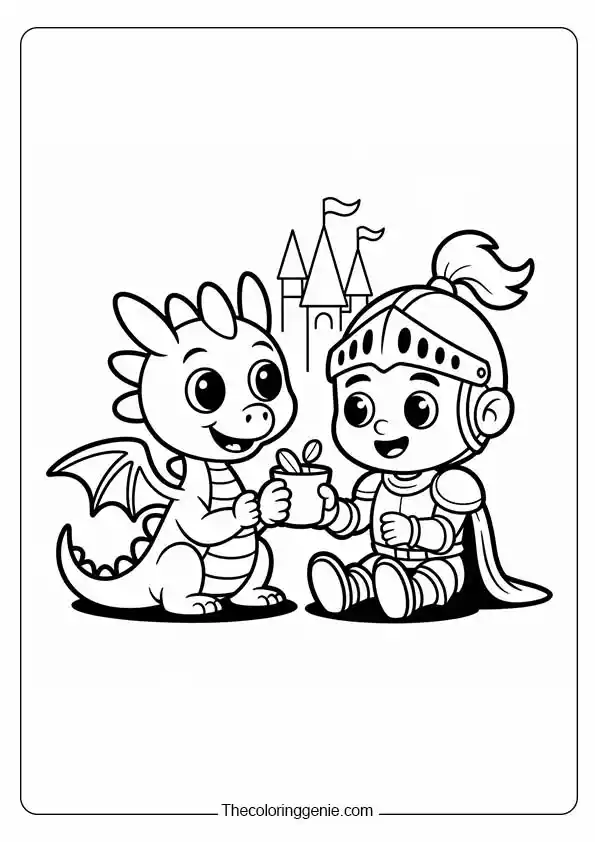
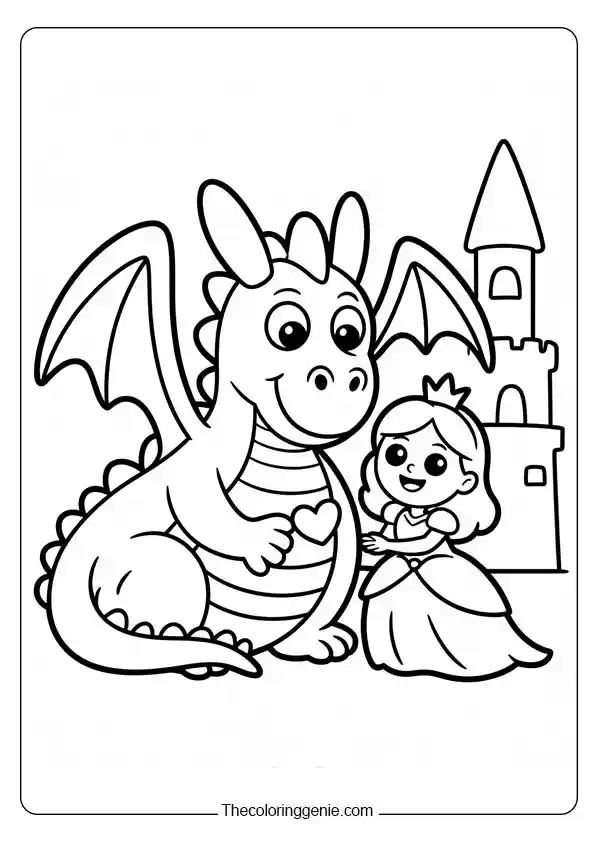
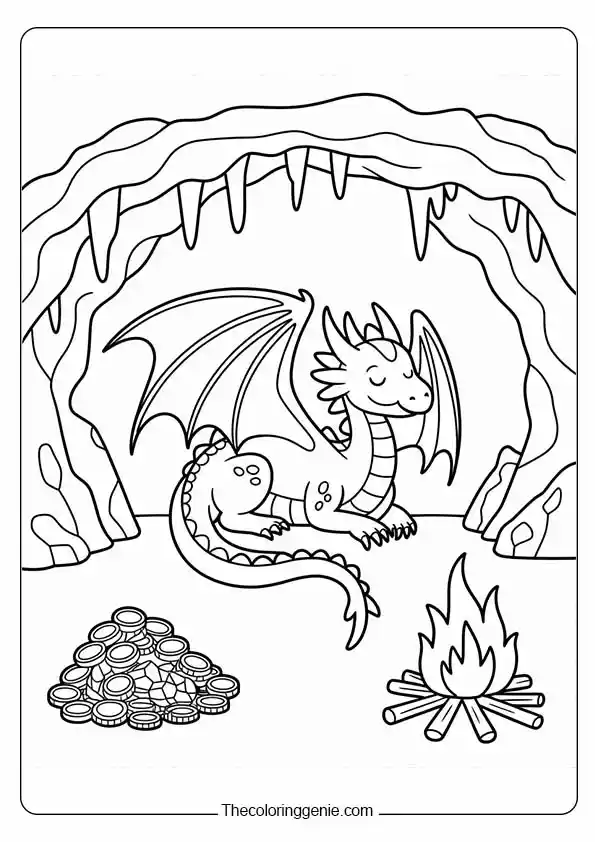
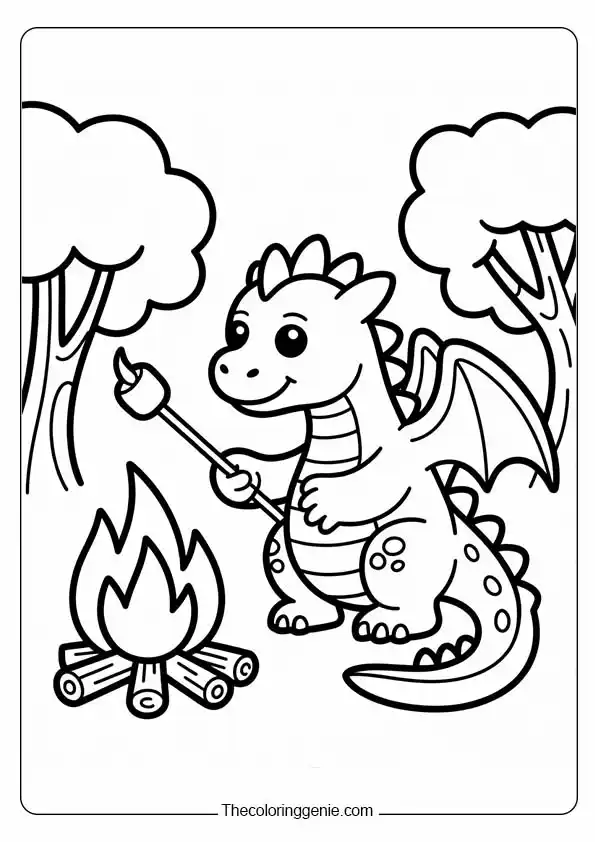
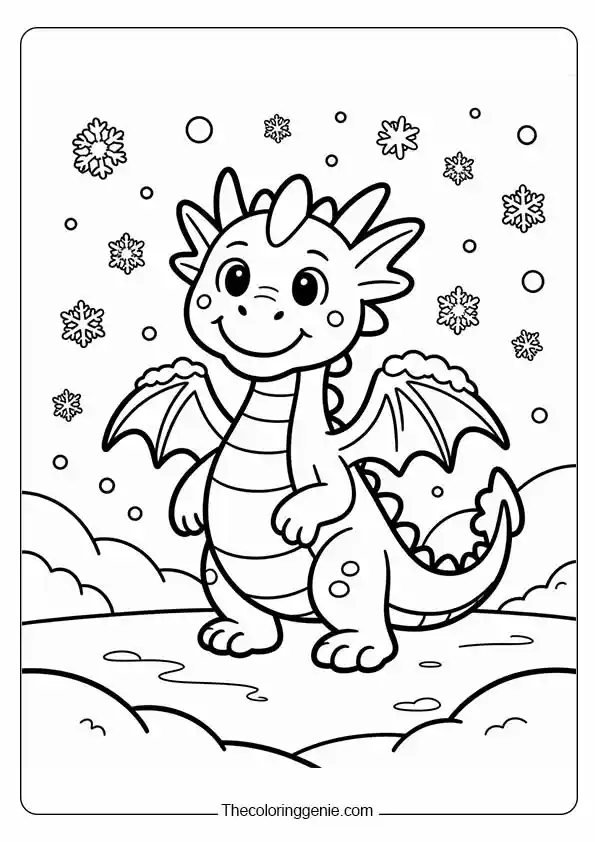
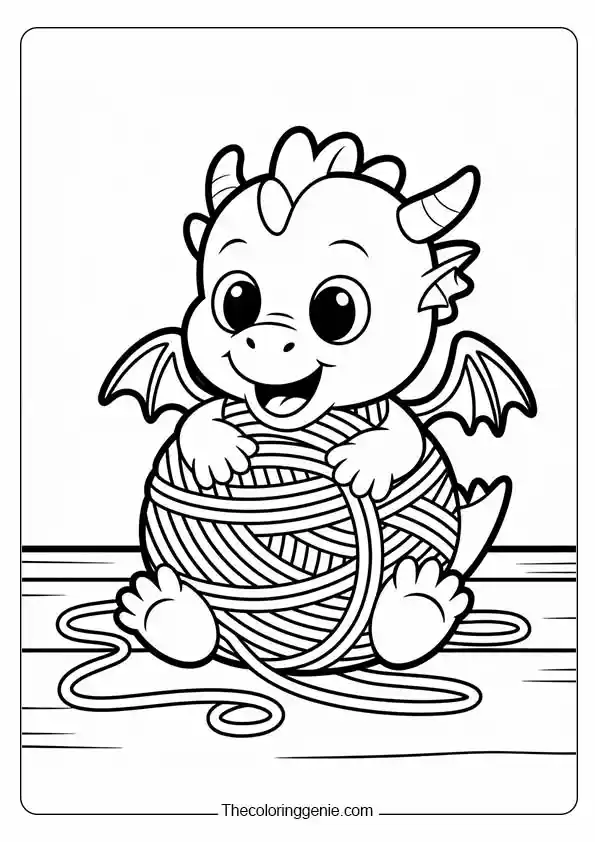
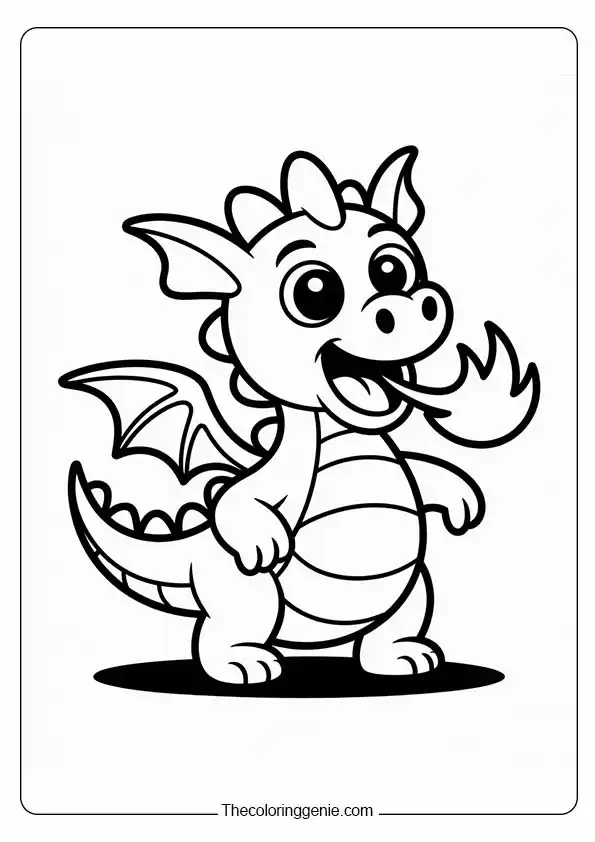
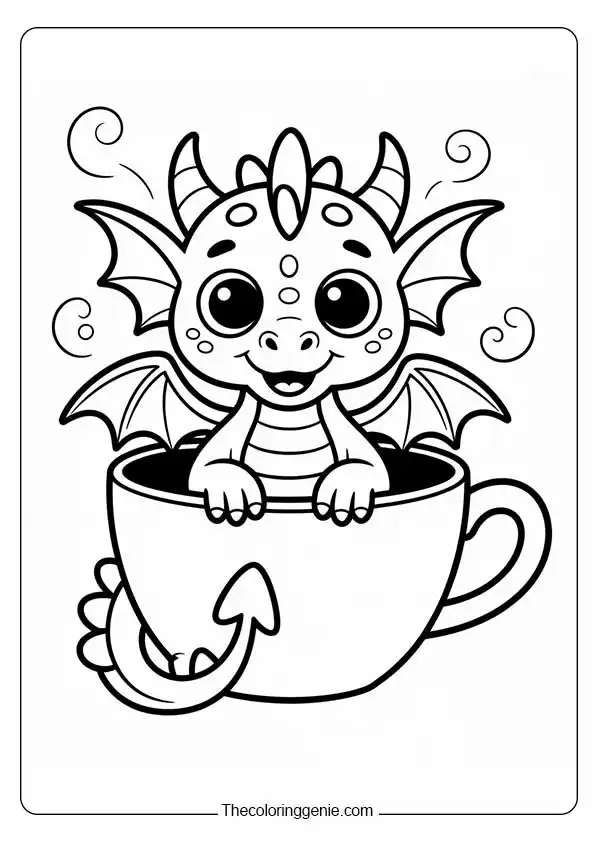
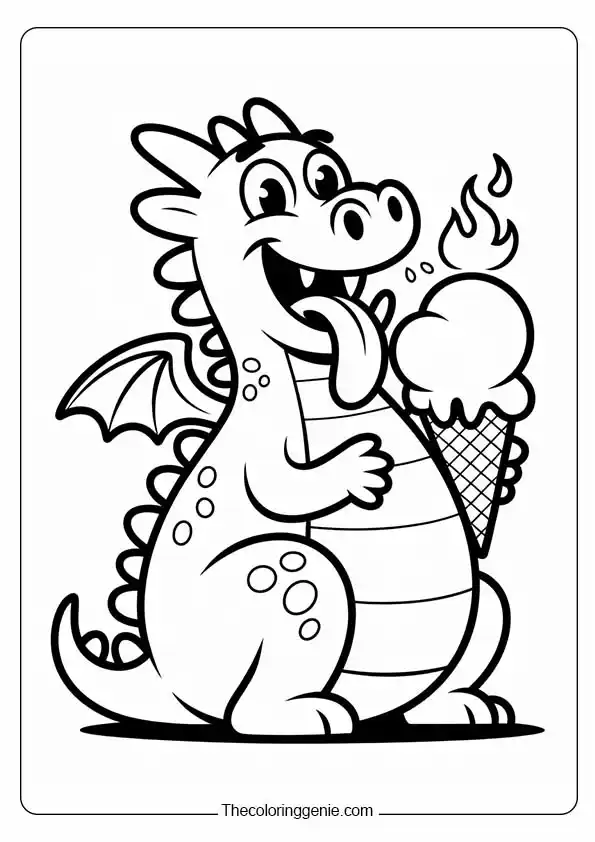
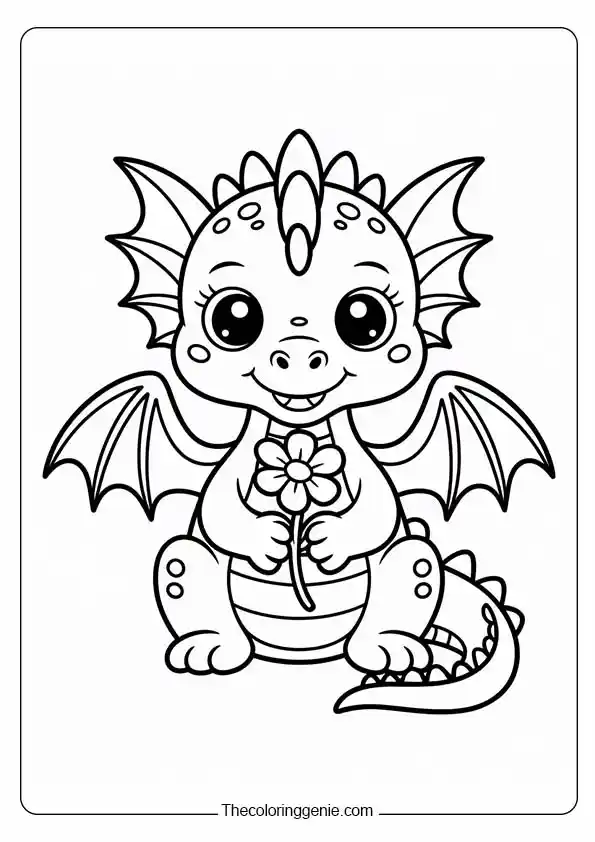
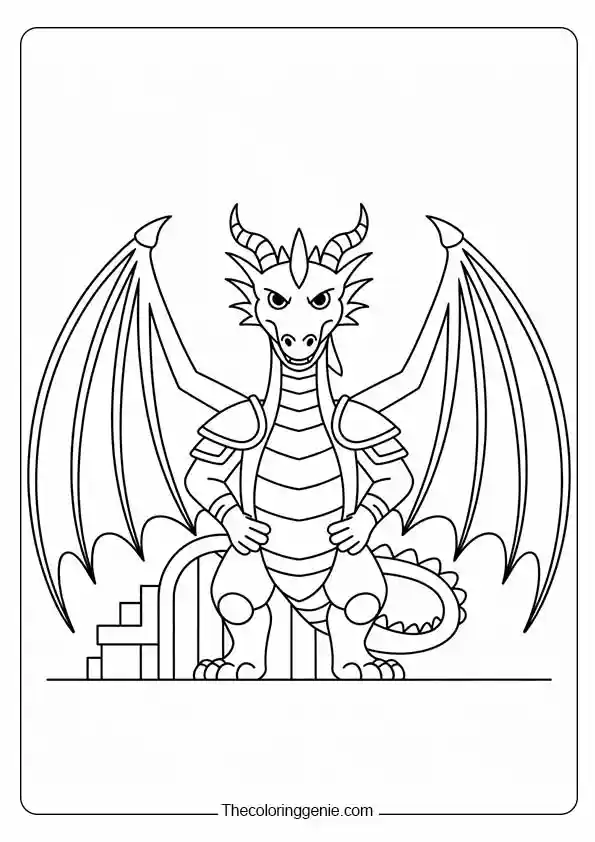
Twenty-seven dragon coloring pages, and they split cleanly in two. Half are cuddly baby dragons doing small, sweet things: hatching from an egg, curled up asleep, hugging a teddy, sipping from a teacup. The rest are older and fiercer: a dragon on a mountain cliff, one breathing fire, a dragon and a phoenix in flight. Every design is a high-resolution PDF for US Letter or A4, free, with no account needed.
A dragon is made up, so no colour is wrong, which makes these a good place to experiment. The parts worth a little thought are the scales and, on a few pages, the fire. Prefer the screen? Every design can be coloured online too.
Free Printable Dragon Coloring Pages For Kids
The collection is grouped by style: cute baby dragons, dragons on an adventure, and epic realistic dragons, and every design carries a difficulty label, so you can see which suits a preschooler and which is a longer sit-down for an older child or an adult. Click any design to open its PDF, or use the download button beneath it.
Choose “Fit to Page” and print on US Letter or A4. Plain paper handles crayons and pencils; for markers, use heavier paper with a spare sheet underneath so colour doesn’t bleed through. Full help is on our printing guide.
Scales, Bellies and Fire
A dragon is imaginary, so any colour works, but a few choices separate a dragon that looks solid and scaly from a flat, lizard-shaped blob.
Scales and a Belly: What Makes It Read as a Dragon
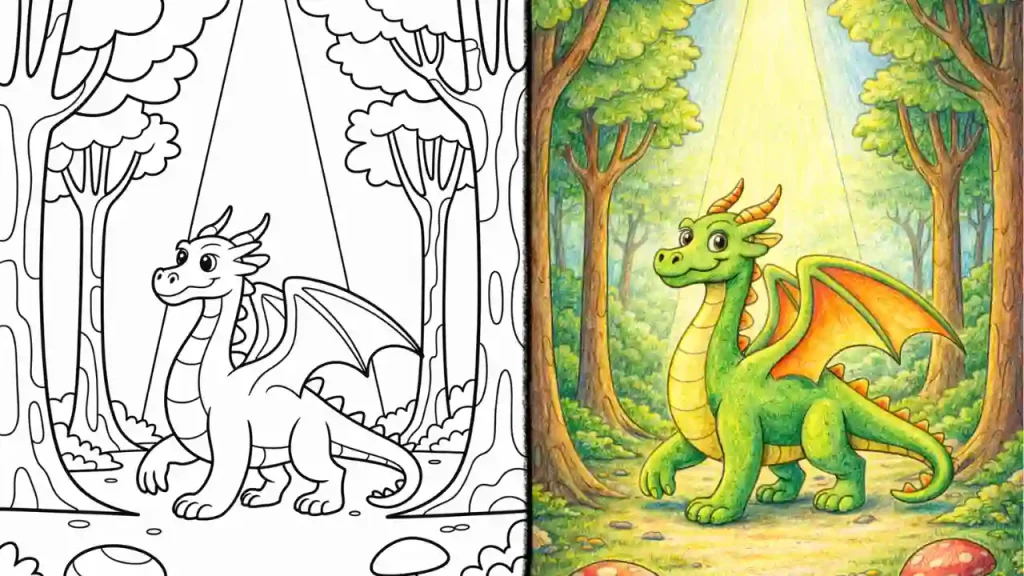
Two things do most of the work. The first is a two-tone body: dragons are almost always drawn with a darker back and a lighter belly, chest, and inner wings, usually cream, tan or pale gold. Pick a main colour for the back and a lighter shade underneath, and the dragon instantly looks rounded instead of flat. The second is the scales: most of these dragons are covered in them, and treating them as more than a single flat fill is what makes the skin look like a dragon’s hide.
Shade the Scales, Don’t Flat-Fill
Lay the body’s base colour down first and keep it even. Then go back over the scales and add a little shadow; press a bit harder along the lower edge of each scale or each row, and leave the opposite edge lighter. That small amount of shading is the whole difference between a sheet of green and a hide of overlapping scales. On the epic dragons, work a second, slightly darker shade into the deepest scales for real depth; the cute baby dragons need only a light touch.
Colouring the Fire
A few of these dragons are breathing fire, and real flames give you a simple rule. A flame is brightest and palest where it’s hottest and cools toward its edges;it runs from blue-white and yellow at its hottest down through orange to red. So colour the fire lightest at the core, nearest the dragon’s mouth yellow or near-white, then orange, then red at the tips. Reach for red everywhere, and the fire becomes a flat red blob; keeping the middle pale is what makes it glow.
Which Tools to Use
Crayons and chunky pencils: the cute baby dragons and younger hands
Washable markers: large body and sky areas (use heavier paper)
Colored pencils: the scales, wings, and the epic dragons, where you shade and layer
A light, blended touch: the fire and the sky, easing yellow into orange into red
Dragons in the Classroom
Dragons aren’t a science topic, but they’re one of the best prompts for imagination, which makes them easy to use.
Name and describe your dragon. Have students colour a dragon, then write a few sentences about it: what it’s called, where it lives, whether its fire is hot or friendly. It turns a colouring page into a quick creative-writing task.
A hatching story. The egg and hatching pages work as a story sequence: colour them in order and write what happens when the dragon comes out.
Early finishers and quiet work. Keep the cute baby dragons for early finishers and the epic, detailed dragons for older students who want longer, absorbing work; no prep needed.
Dragon Pages at Home
A dragon-party table. Set out a stack of pages and a cup of pencils for a dragon-themed birthday: younger guests on the baby dragons, older ones on the epic designs.
A travel pack. Slip a few pages and a clipboard into a bag for car rides and waiting rooms. Colored pencils travel better than markers, which leak and lose their caps.
A “whose dragon is fiercest” challenge. Give two children the same dragon and let each colour it a different way:y an ice dragon, a lava dragon, a jungle dragon, then compare.
FAQs
Which dragon pages are best for a young child?
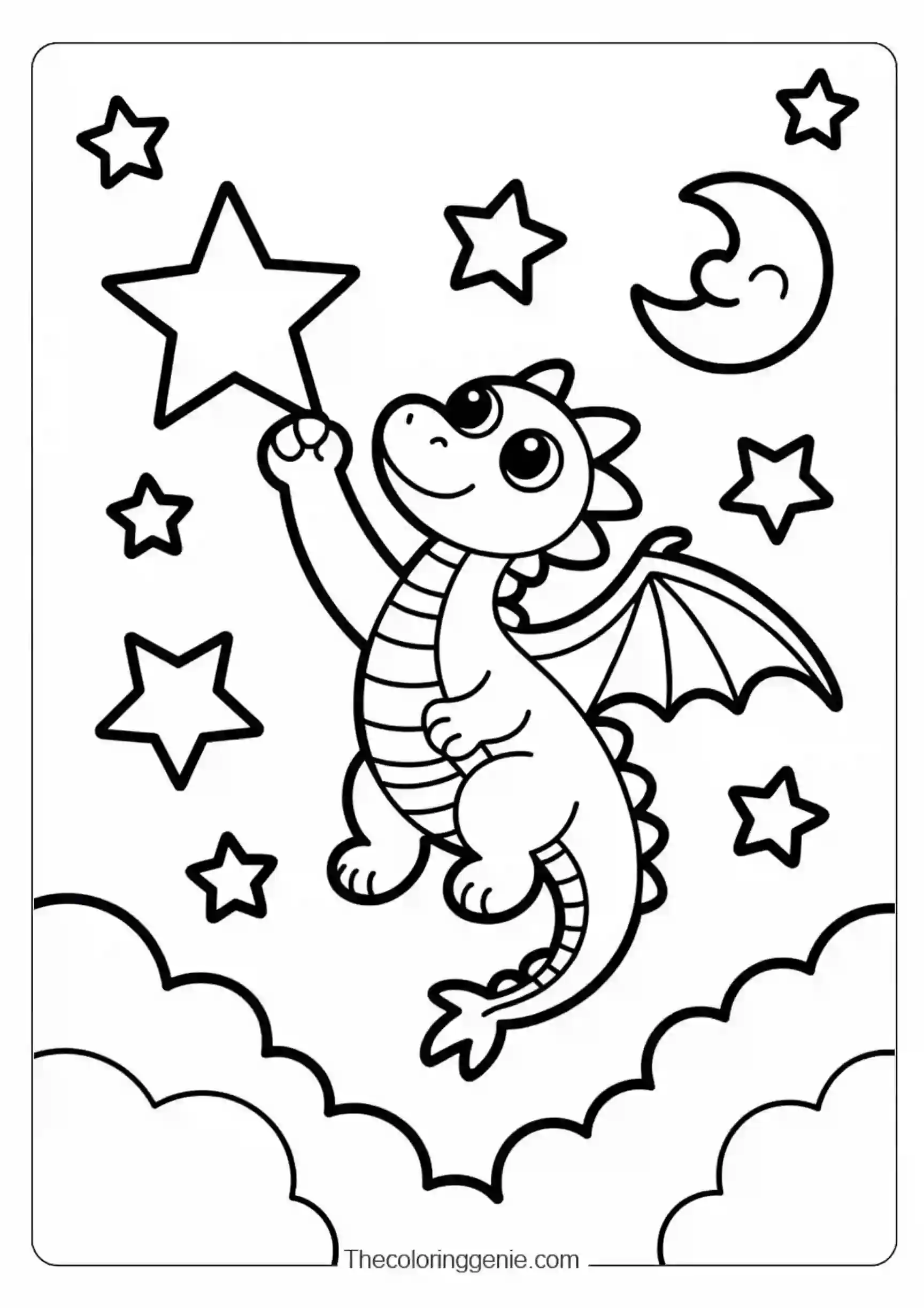
The cute baby dragons the one holding a star, the dragon in a teacup, the sleeping baby have big, rounded shapes and are grouped under the Easy label.
Are there realistic dragons for older kids and adults?
Yes. The mountain-cliff dragon, the dragon and phoenix, the crowned dragon king, and the cave dragon have finer scales and more detail, made for colored pencils.
Are any of these from movies or shows?
No. These are all original dragons drawn in-house,se not characters from films, games, or TV.
What colour should a dragon be?
Any colour you like; they’re imaginary. Giving the back and belly two different shades, and shading the scales, matters more than the colour itself. The guide above shows how.
Can I colour these online instead of printing?
Yes. Every design can be coloured online in your browser, free, with no account.
Illustrator & Creative Artist at The Coloring Genie
Sarah Mitchell creates printable coloring artwork for The Coloring Genie,
including animal, nature, seasonal and imaginative designs. She focuses
on creating clear outlines and printable designs that are enjoyable to
color. Explore Sarah’s published work or see how she develops a coloring
page from an early sketch to the finished artwork.