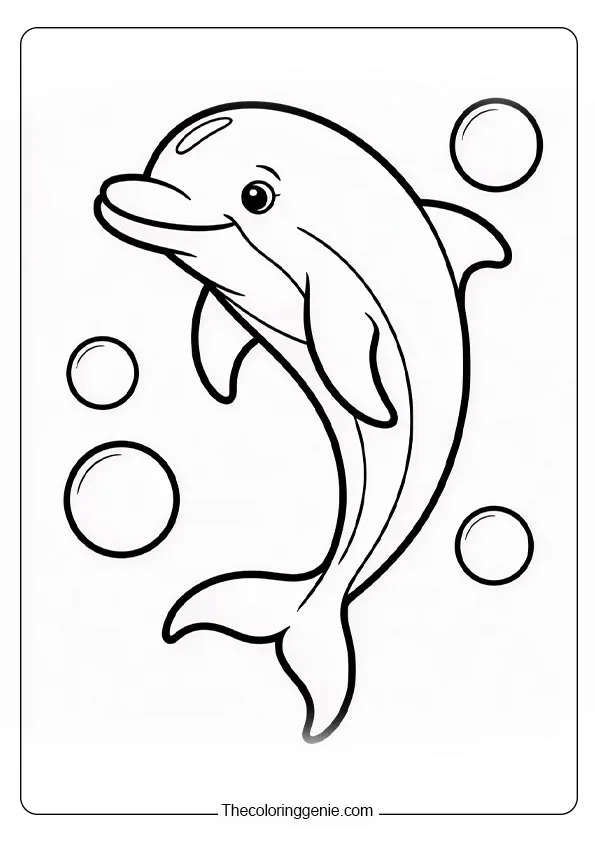
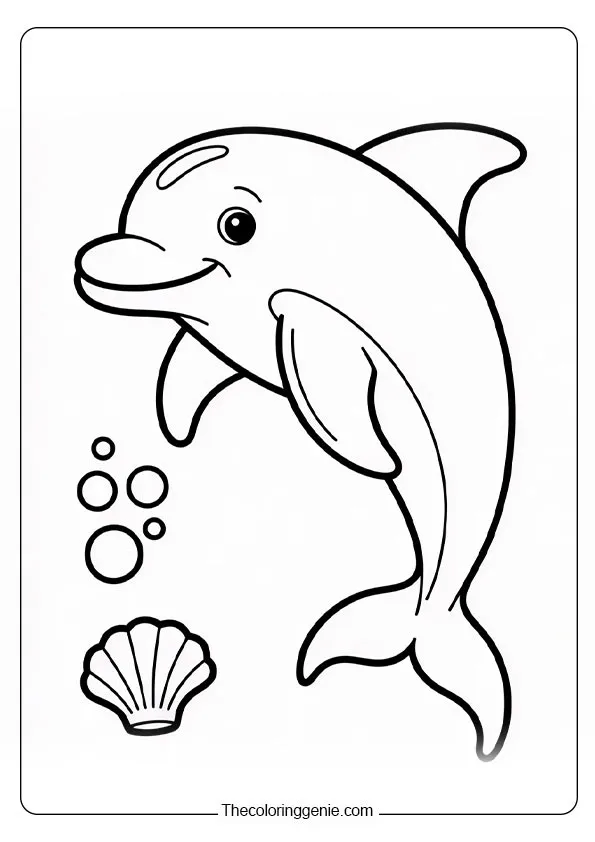
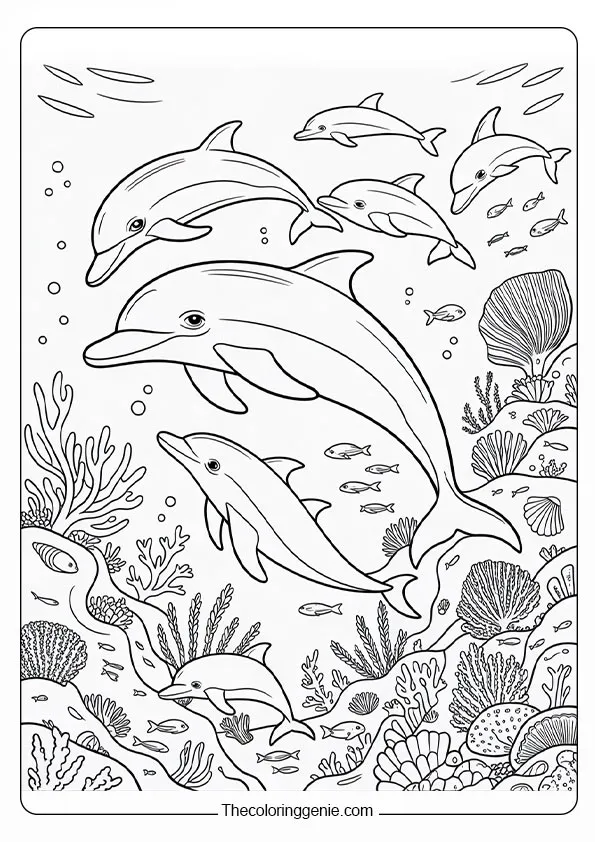
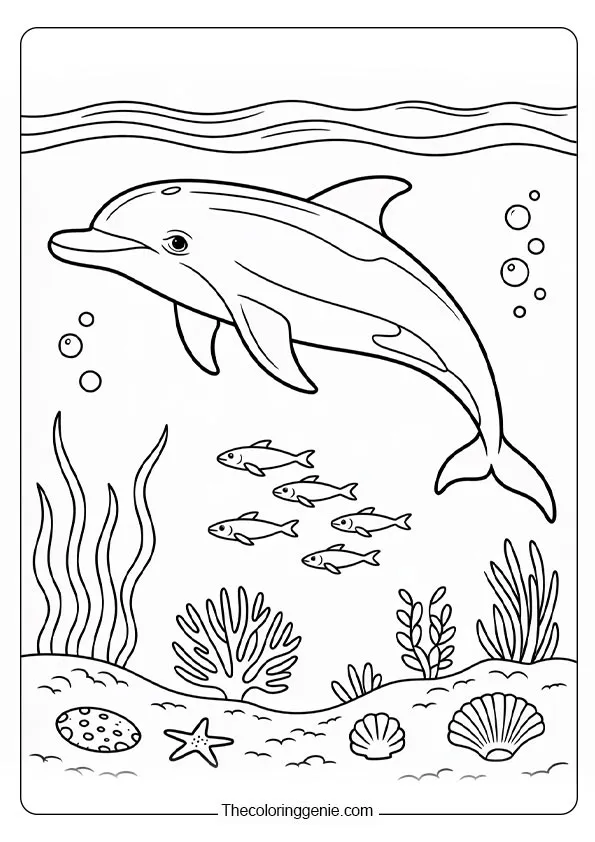
These dolphin coloring pages are sorted by age, from one smiling dolphin with a thick outline for preschoolers to {a realistic bottlenose portrait for older kids and adults. Each one is a high-resolution PDF for US Letter or A4, with no account needed, and every design can also be colored online.
A dolphin isn’t one flat gray, and that’s what makes it a good page to color. Below the gallery you’ll find how a real dolphin’s shading runs from dark back to pale belly, a step-by-step guide to copying it, and a fact about baby dolphins that explains why mother-and-calf pages look the way they do.
Free Printable Dolphin Coloring Pages for Kids
Choose by detail level: thick outlines and large shapes for ages 2–4, leaping dolphins and ocean scenes for ages 5–8, and finer lines for older kids and adults. Start with the group that fits, and move up when the simpler pages start to feel too quick.
A common bottlenose dolphin is gray, but the shade changes across its body.According to NOAA Fisheries, the back runs from light gray to nearly black near the dorsal fin, and the belly is pale, sometimes nearly white. Dolphins from shallow coastal waters are often lighter and smaller than those offshore.
So a realistic dolphin has three zones:
Zone
Color
Tip
Back and dorsal fin
Mid to dark gray
Press harder here
Sides
Medium gray that fades down
Blend upward and downward
Belly
Pale gray to nearly white
Leave the paper white or use a very light touch
How to Shade a Dolphin in Four Steps
Color the whole dolphin in the lightest gray you have, pressing gently.
Go over the back and the dorsal fin with a medium gray, working from the top down and letting the pressure fade.
Add the darkest gray along the top edge of the back and the fin only.
Leave the belly pale, then color the water around the dolphin last so it doesn’t smudge into the body.
For a cartoon dolphin, one solid blue or gray works fine. The shading is for pages where you want a realistic look.
A Fact About Baby Dolphins That Helps You Draw Them
A baby dolphin is called a calf, and NOAA explains that calves swim in what’s called “baby position,” right alongside the mother, where they get an easy ride in her slipstream. Calves nurse for about 20 months and usually stay with their mothers for three to six years.
On a mother-and-calf page, that’s your guide. Keep the calf pressed close against the mother’s side, color it the same gray as her, and use a little more pale on its belly. The two dolphins read as a pair.
Tools for Dolphin Pages
Gray gradient: a colored pencil, pressing harder on the back.
Water: a crayon on its side, or a pale blue marker on heavier paper.
Splashes: a white gel pen or white crayon over the water.
Eyes: leave a tiny white dot in each one so they look shiny.
Backgrounds: layered blues, deeper at the bottom and paler near the surface.
Things to Do With Finished Dolphin Pages
Classroom Idea: How Long Is a Dolphin?
A bottlenose dolphin is between 6 and 13 feet long and weighs 300 to 1,400 pounds, according to NOAA. This activity makes that size real.
Mark a 6-foot line and a 13-foot line on the floor with masking tape or yarn.
Have students lie down along the lines, one at a time, to see where they fit.
Back at their desks, students color a dolphin page and write “6 to 13 feet” underneath.
Display the pages along a long strip of blue paper, with the 6-foot mark and 13-foot mark drawn on it.
It fits a unit on ocean animals, measurement, or comparing sizes.
Home Craft: Wave Collage
Color a dolphin page and cut around the dolphin.
Glue it onto a sheet of dark blue paper.
Tear strips of light blue and white paper into wavy shapes.
Glue the strips along the bottom so the dolphin looks like it’s leaping out of the water.
Safety tip: An adult should handle the scissors with young children. Keep glue and small paper scraps away from babies and toddlers.
FAQ’s
Are dolphins fish?
No. NOAA lists dolphins with whales and porpoises as marine mammals, and says they still need to breathe air.
How do dolphins sleep?
NOAA says whales and dolphins rest half of their brain while the other half stays awake to breathe. This is called unihemispheric sleep.
How do dolphins communicate?
With squeaks, buzzes, whistles, and clicks that NOAA says can be heard from miles away. They are also thought to communicate by slapping the water’s surface.
Do dolphins chew their food?
No. NOAA says dolphins swallow fish whole, head first.
Can dolphins recognize themselves?
NOAA says dolphins and their kin are the only marine mammals that have passed the mirror test of self-awareness.
What colors should I use for a dolphin?
Colors vary by species, so use a reference photo if you want to match a specific one. For a simple page, gray-blue on top with a paler belly looks natural.
Illustrator & Creative Artist at The Coloring Genie
Sarah Mitchell creates printable coloring artwork for The Coloring Genie,
including animal, nature, seasonal and imaginative designs. She focuses
on creating clear outlines and printable designs that are enjoyable to
color. Explore Sarah’s published work or see how she develops a coloring
page from an early sketch to the finished artwork.