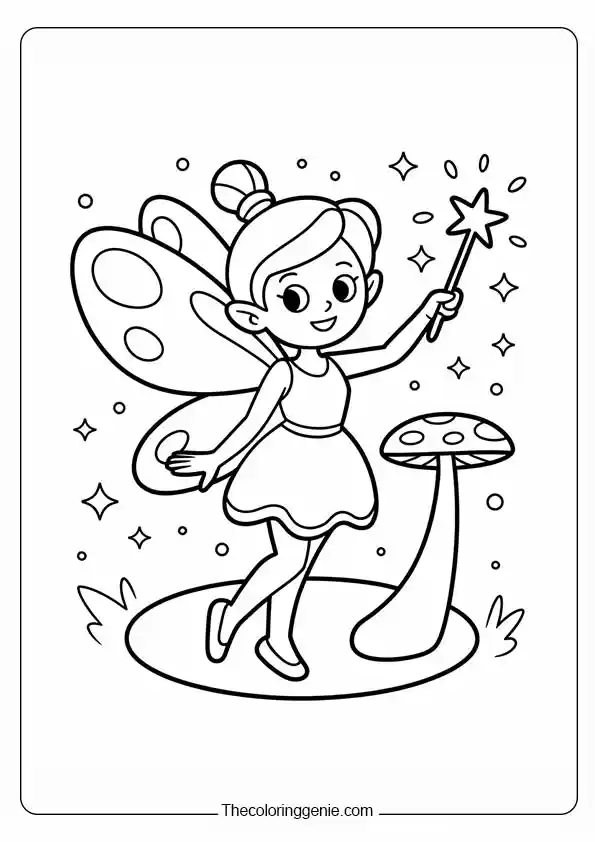
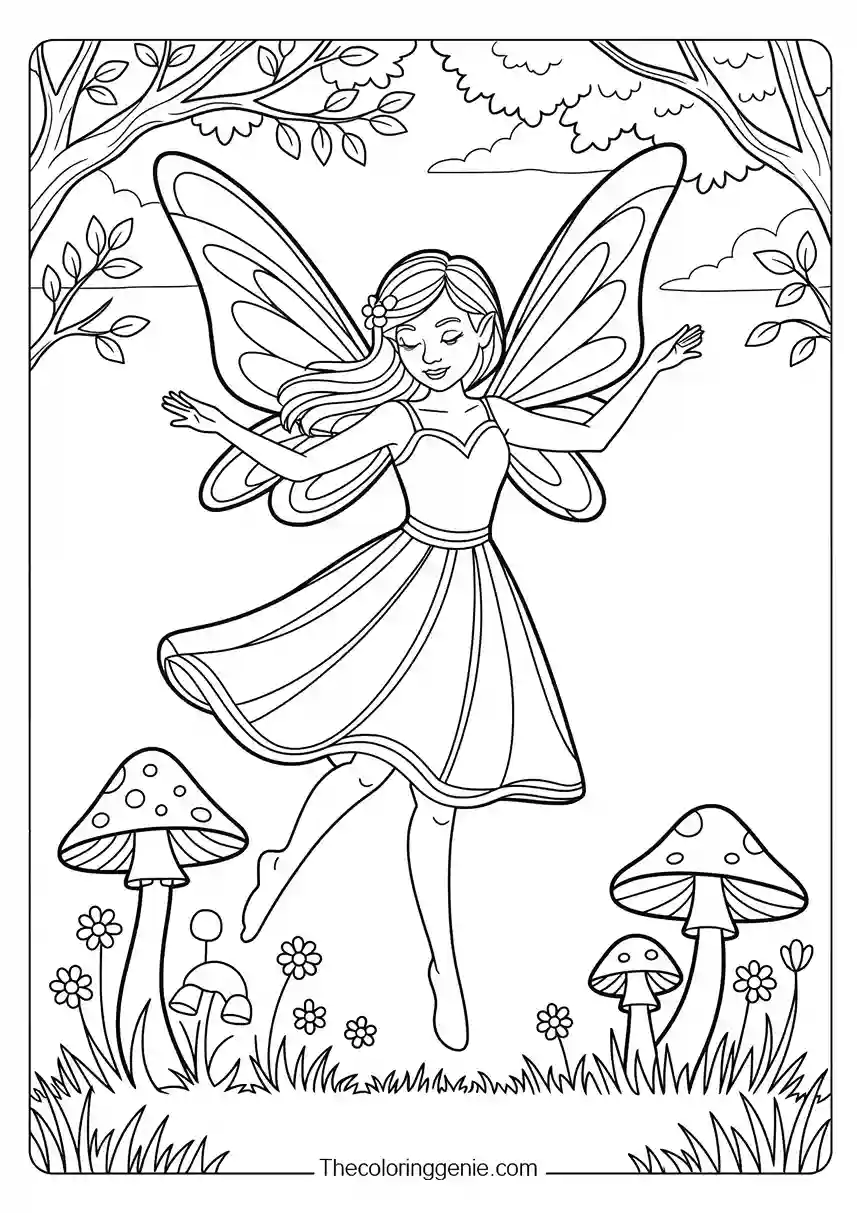
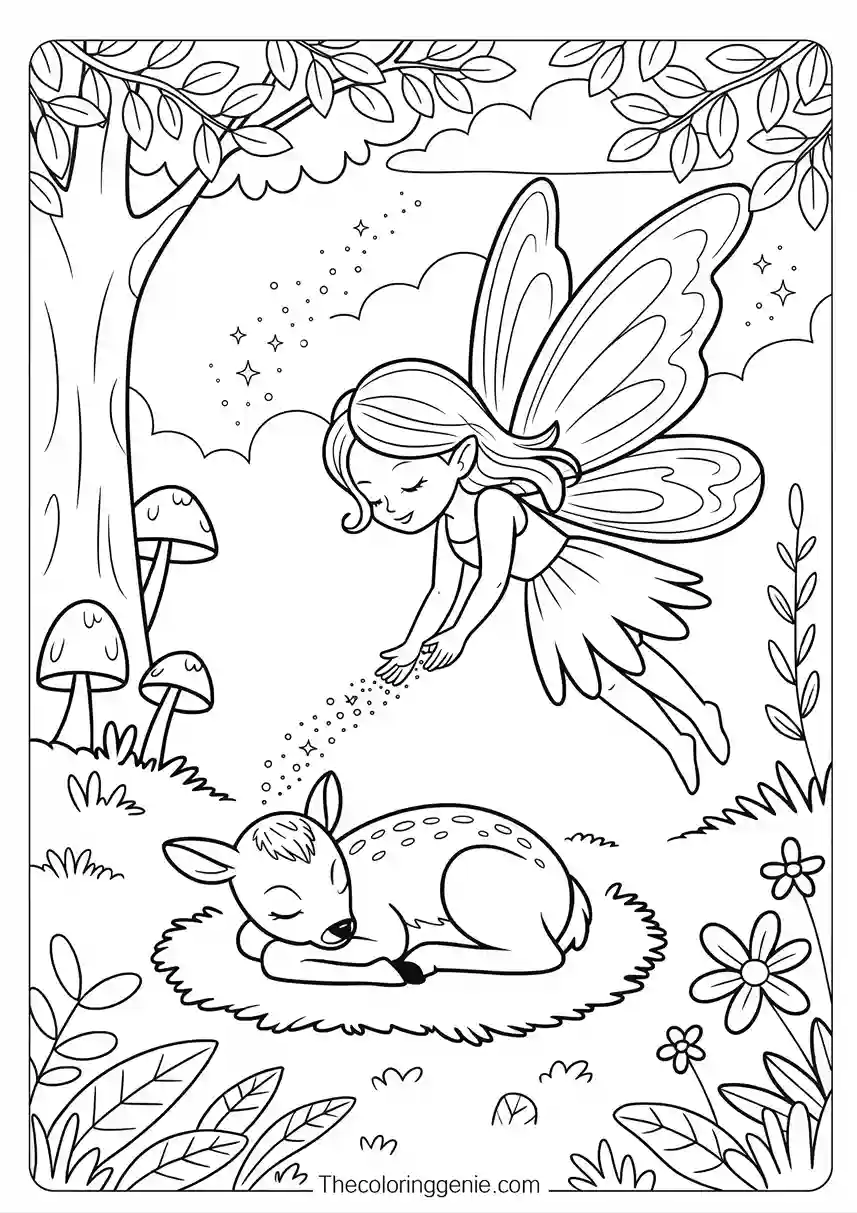
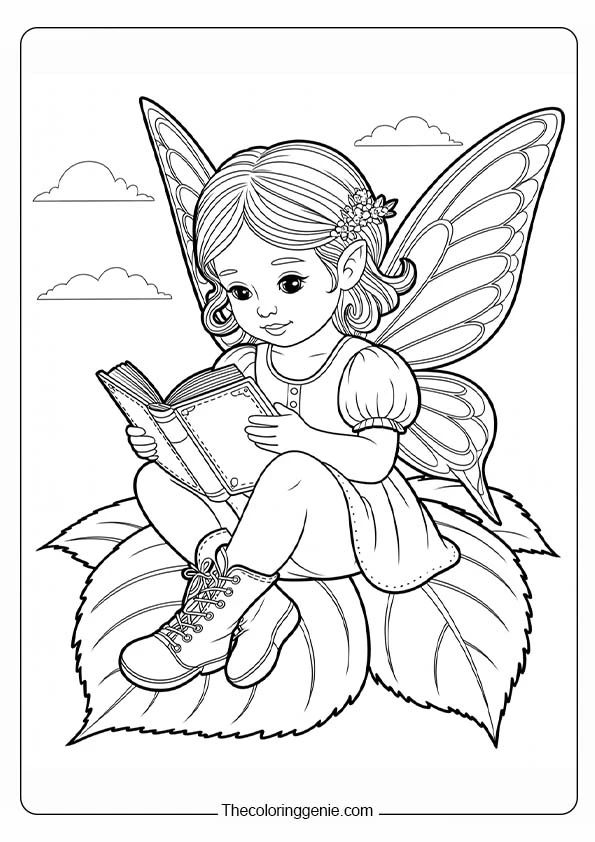
Twenty-two free fairy coloring pages to print, from a tiny fairy sheltering under a leaf on an acorn to busy flower gardens full of butterflies, dragonflies and hummingbirds. There are woodland fairies on toadstools, a fairy riding a squirrel, and one curled up asleep on a crescent moon. Every design is a high-resolution PDF for US Letter or A4, with no account needed.
Fairies are one of the best things to color, because there’s no wrong answer nobody has ever seen one, so the whole palette is yours. The one part worth stopping to think about is the wings, which decide whether a fairy looks like she could lift off the page. If you’d rather not print, you can color every design online too.
Free Printable Fairy Coloring Pages
The collection is grouped by scene: garden fairies, woodland fairies, and flying or magic fairies, and every design carries a difficulty label, so you can tell at a glance which suits a younger child and which is a longer sit-down for an older kid or an adult. Click any design to open its PDF, or use the download button underneath it.
Choose “Fit to Page” and print on US Letter or A4. Plain paper is fine for crayons and pencils; for markers, use heavier paper with a spare sheet underneath so the color doesn’t show through. Full help is in our printing guide.
How to Color a Fairy
Because a fairy is imaginary, there’s no palette you have to match, but a few choices separate a flat fairy from one that looks ready to fly.
Pick a Palette First
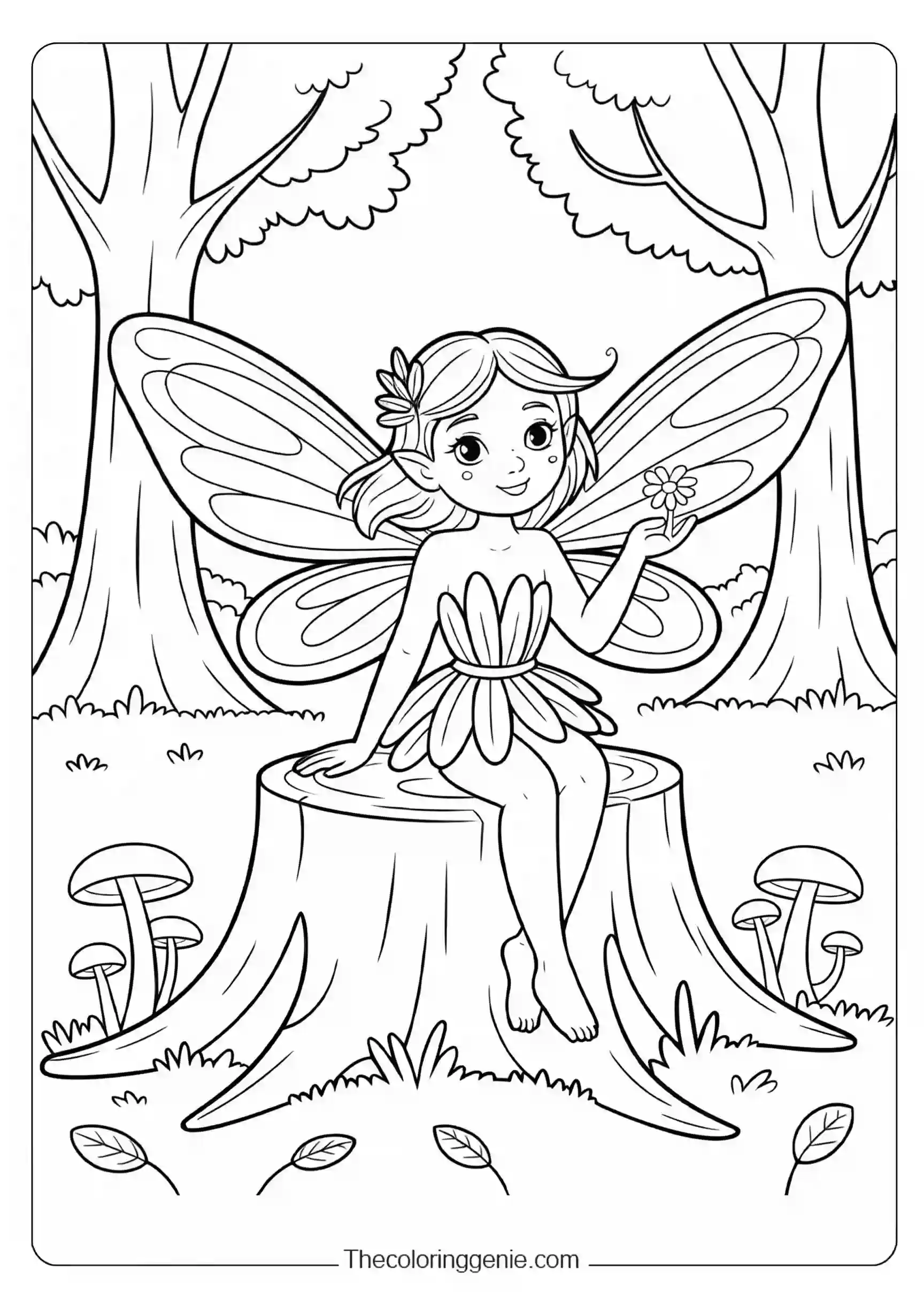
There’s no wrong color for a fairy, so it helps to choose a mood before you start rather than reaching for colors one at a time. Three work especially well with these designs. A spring-garden palette of soft pink, lilac, fresh green and butter yellow suits the flower scenes. A woodland palette of warm brown, moss green, russet, and a deep red for the toadstools fits the forest pages.
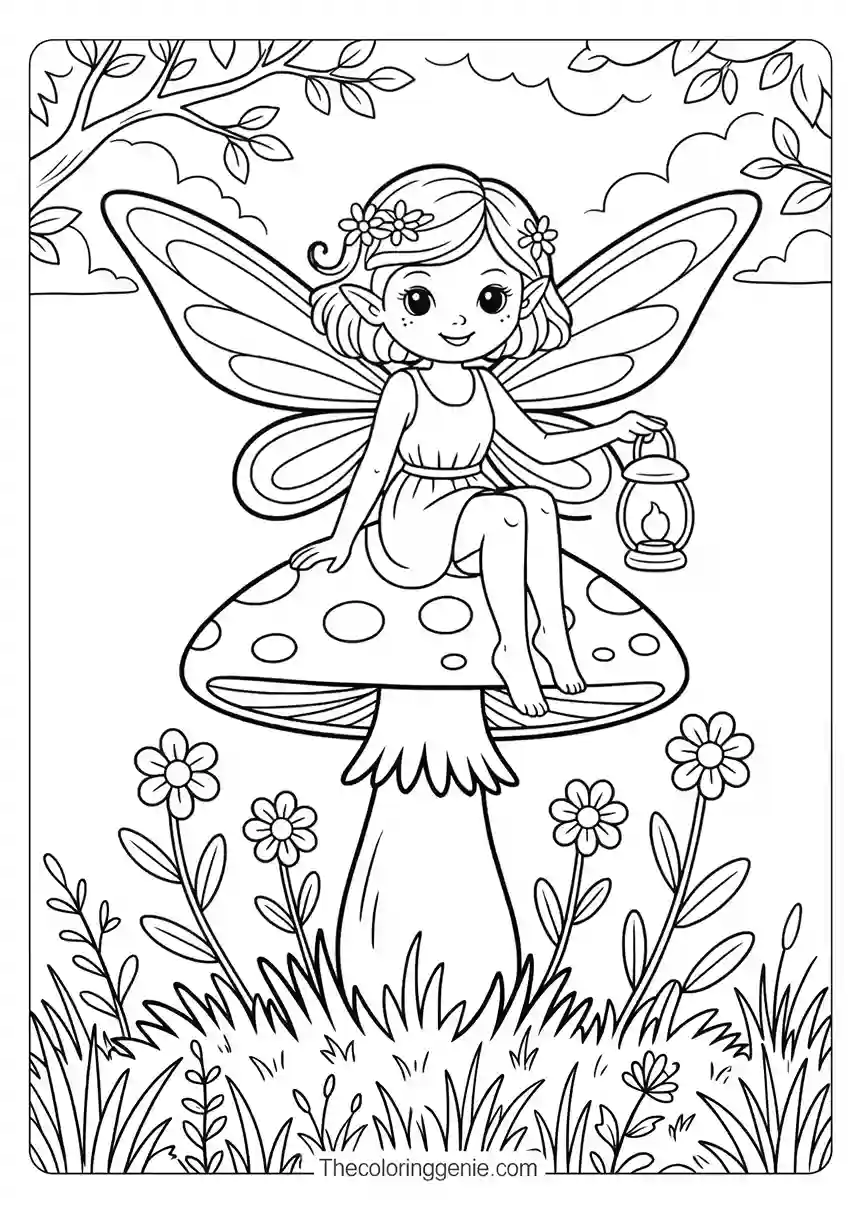
A moonlit palette of midnight blue, silver, and pale violet makes the crescent-moon and night scenes glow. One detail is grounded in the real world: the red-and-white spotted toadstool under so many of these fairies is an actual mushroom, thefly agaric, which has a scarlet cap dotted with white. Color the caps red and leave the spots as bare paper, and they read instantly as fairy-tale toadstools.
Wings Last, and Lightest
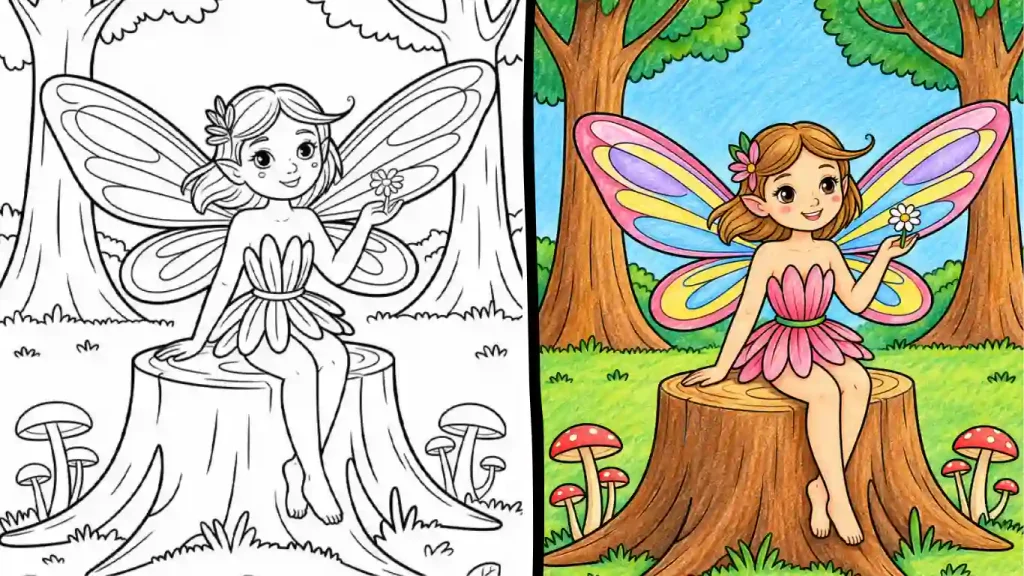
Work from the background inward: the garden or forest first, then the dress and hair, and the wings last of all. Keep the wings a few shades lighter than everything else, a pale wash of one or two colors rather than a solid fill. Leaving small patches of white paper inside the wings is what gives them that see-through, light-catching look. Fill them in dark and heavy, and the fairy suddenly looks weighed down.
The Wing Trap
The one mistake that flattens a fairy page is coloring the wings like the dress. If they’re as solid and as dark as her clothes, they stop looking delicate, and the whole figure reads as heavy. Keep them lighter, or give them a different color family from the dress. The other thing to watch on the garden pages: a green dress can vanish into all the surrounding leaves and stems. Pick a color that stands clear of the background, or press a little harder on the dress’s outline, so her shape still reads.
Which Tools to Use
Crayons and chunky pencils: the simpler pages and younger hands
Washable markers: dresses and large background areas (use heavier paper)
Colored pencils: the wings and the busy garden scenes, where you need to layer and blend softly
A white gel pen, or just bare paper: sparkles, star fields, and the shimmer inside the wings
Fairy Activities for School and the Classroom
Fairies turn up all over early-years story time, which makes these pages easy to use in class.
One Fairy, Three Worlds. Print the same fairy three times. One child colors her as a spring-garden fairy, one as a woodland fairy, one as a night fairy, then line them up. It shows how much a palette alone can change a picture, and it gets children talking about their choices.
Color and Write a Spell. Older students color a fairy, then write two or three sentences about the magic she’s casting. It works as a quick creative-writing prompt inside a fairy-tale unit.
Early finishers and indoor recess. Keep a folder of the simpler fairies for early finishers and the detailed garden scenes for older students who want quiet, absorbing work. They need no prep, so they cover a rainy lunchtime.
Fairy Activities for Parents at Home
A fairy-party table. Set out a stack of pages and a cup of pencils for a fairy-themed birthday. Younger guests take the simpler fairies; older ones take the detailed gardens.
A quiet-time pack. Slip a few pages and a clipboard into a bag for appointments, restaurants or car rides. Colored pencils travel better than markers, which leak and lose their caps.
A “design your own fairy” challenge. Give two children the same fairy and ask each to invent a different kind a fire fairy, an ice fairy, an autumn fairy then compare how different the same outline can look.
FAQs
Which fairy pages are best for a young child?
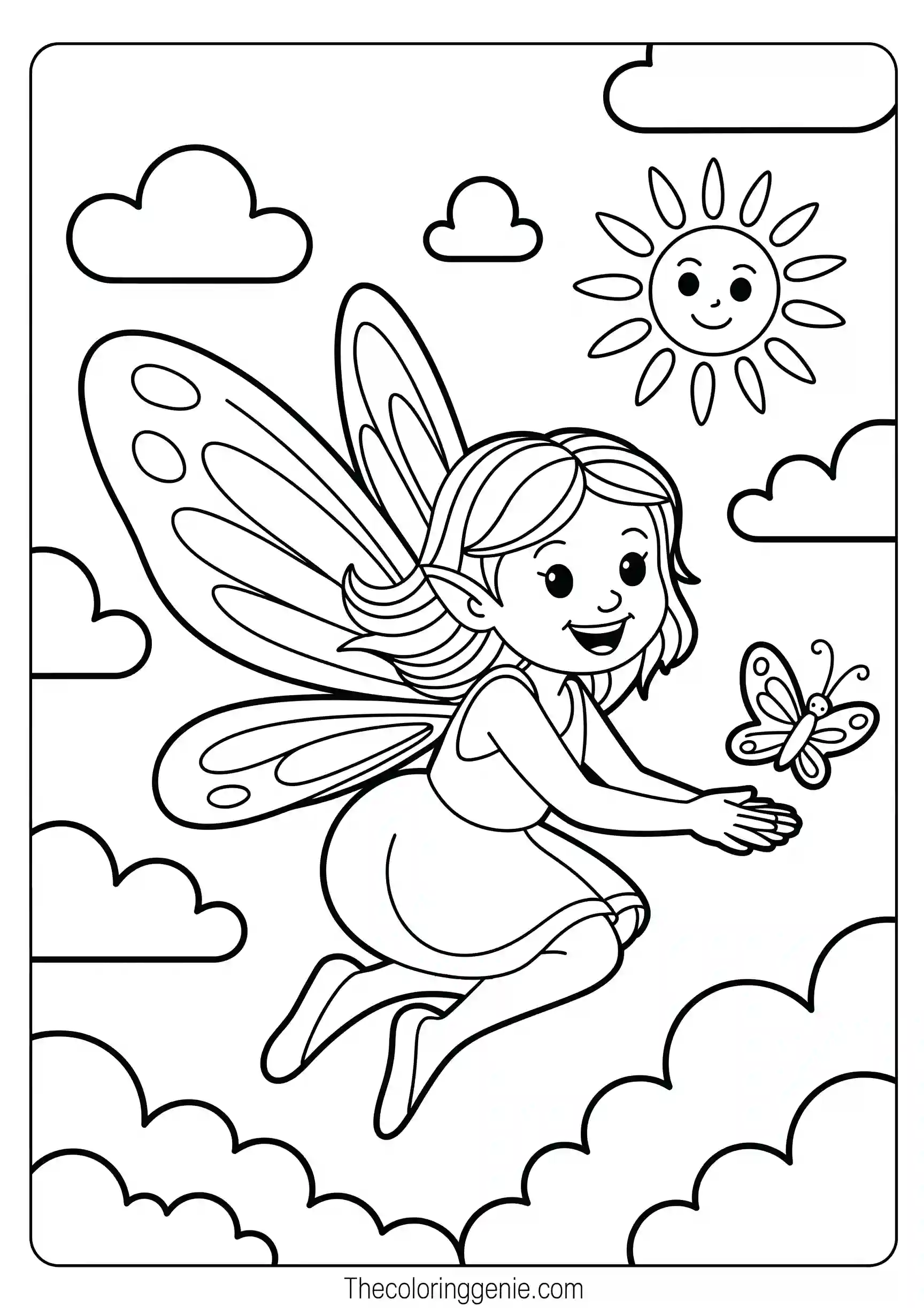
The simpler designs a single fairy with an open background, like the fairy on the acorn or the cute fairy with one butterfly have fewer small areas and are grouped under the Easy label.
Are any detailed enough for adults?
Yes. The flower-garden scenes, with layered petals, butterflies, and fine wing detail, are made for colored pencils and a longer sitting.
Do any show more than one fairy?
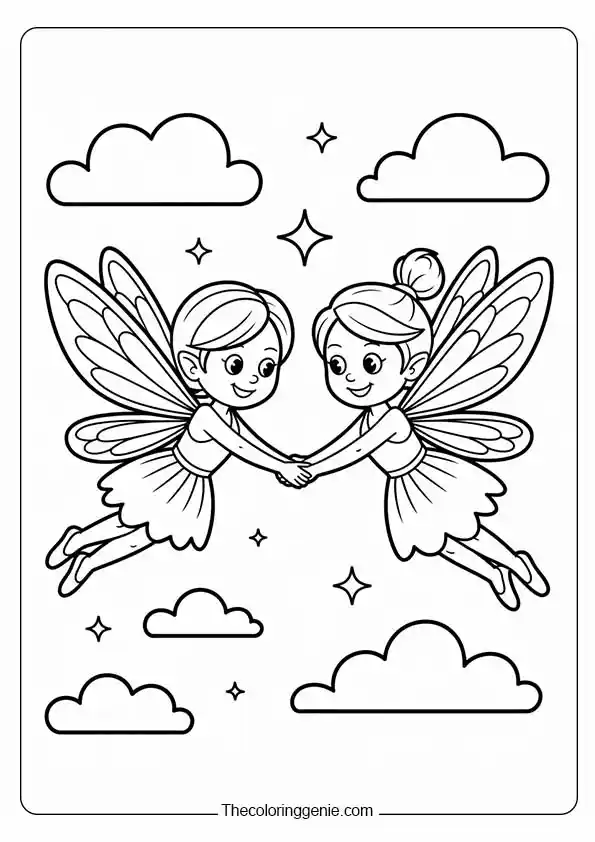
Yes, the two-fairies-flying-together page has a pair, which is a good one for two siblings to color side by side.
What color should fairy wings be?
Anything you like, but keep them lighter than the dress and leave a little white for shimmer. The color guide above explains why.
Can I color these online instead of printing?
Yes. Every design can be colored online in your browser, with no account and nothing to install.
No comments to show.
Sarah Mitchell
Illustrator & Creative Artist at The Coloring Genie
Sarah Mitchell creates printable coloring artwork for The Coloring Genie,
including animal, nature, seasonal and imaginative designs. She focuses
on creating clear outlines and printable designs that are enjoyable to
color. Explore Sarah’s published work or see how she develops a coloring
page from an early sketch to the finished artwork.